


Filter
ctg
Category
Flow rate
Recovery rate
Number of membranes
Quantity of resin
Volume capacity
Connection
Control valve
Filter by use
Application
Categories
Certification
Configuration
Duration
Smart functions
Added minerals
Compatible with
Membrane capacity
Element type
Filter lineup
Filter media
Filter type
Flushing
For filter types
Mineralization level
Number of bathrooms
Pressure tank
Pure to drain ratio
Replaceable type
Removes pollutants
Pressure tank size
Volume of pressure tank
Water type




£ 384.45
excl. VAT
£
461.25
incl. VAT


£ 390.00
excl. VAT
£
468.00
incl. VAT

£ 256.67
excl. VAT
£
308.00
incl. VAT
-
What Is Granular Activated Carbon and How Does It Work?
-
Types of Activated Carbon Used in Water Filtration
-
Key Benefits of Activated Carbon Filtration
-
Applications of Activated Carbon in Water Treatment Systems
-
Why Buy Ecosoft Activated Carbon?
FAQ
-
Different types of filtration materials provide various levels of purification of drinking, household, commercial, or industrial water. The one with the broad spectrum of effects is activated carbon, which removes organic compounds, chemicals, including industrial solvents, and chlorine.
Ecosoft offers granular activated carbon from various manufacturers at an affordable price. You can order it online from our shop and get it delivered within 2-5 days.
-
What Is Granular Activated Carbon and How Does It Work?
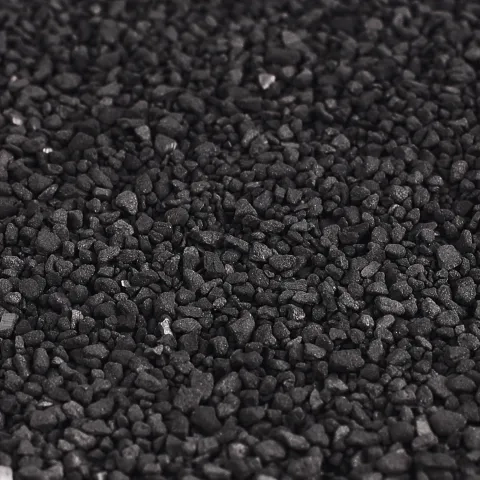
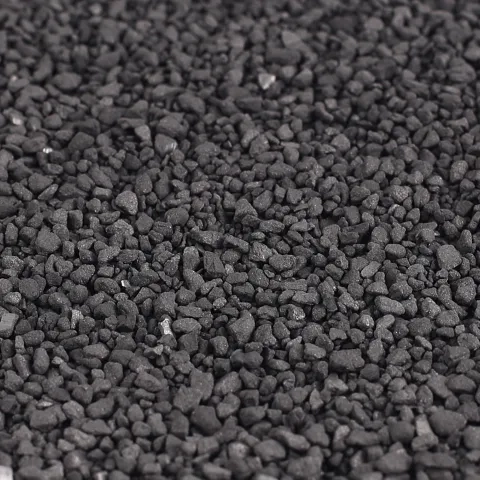
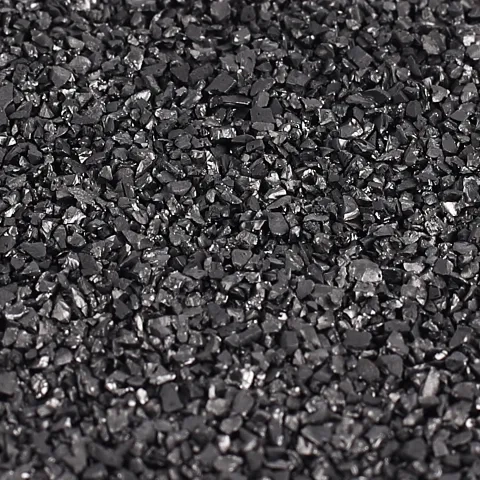
Granular activated carbon is a filter media obtained from natural materials that are carbonised through high temperature and activated into carbon with very hot steam or chemicals. Consequently, the final product becomes highly porous, which is a perfect structure to absorb organics with low molecular weight. As materials, coconut shells, coal, or wood are mainly used.
In a carbon filter for water, liquid flows over granules that absorb contaminants, trapping organic compounds, pesticides, herbicides, chlorine, volatile organic compounds, and other chemicals. This media can even reduce levels of some heavy metals, like copper, lead, and mercury. It also improves the smell and taste of water. Thanks to a large internal surface area formed after the carbonisation and activation, its adsorption capacity is very high.
Types of Activated Carbon Used in Water Filtration
The water purification carbon can be classified into types according to the material:
- Coal-based. It has impact resistance and lots of pores, which are yet large enough to filter out smaller pollutants. A worse taste should be mentioned.
- Wood-based. It contains pores of various sizes and provides proper filtration with excellent water taste improvement. However, it is not a perfect solution for high-grade filtration.
- Coconut-based. It has perfect filtering properties because of the highest density of micropores and still maintains mechanical strength. This media ensures the purest water compared with the above variants.
Besides, there is a granular, powered, extruded, or carbon block filter. For domestic usage, the granular activated carbon consisting of particles of different sizes suits better. There is also activated carbon produced according to specific technologies, like the bituminous granular one. You can order it on our website if you need it for hydrogen sulfide removal in domestic, commercial, and industrial water treatment.
Key Benefits of Activated Carbon Filtration
An activated carbon filter provides comprehensive water treatment and has the following advantages:
- high adsorption capacity due to a large surface area;
- treating without introducing chemicals into the treated water;
- agglomerated structure that enables particle-free filtration;
- minimal dust during handling thanks to low ash content;
- a long service life due to multiple backwashing cycles;
- stable, reliable result and high level of performance;
- compatible with other units to provide comprehensive purification.
Activated carbon filter systems are cost-efficient, eco-friendly, easy to maintain, and have versatile usage.
Applications of Activated Carbon in Water Treatment Systems
GAC is used for water purification for residential and large-scale industrial purposes in any sectors where water quality matters, including:
- food and beverage production;
- pharmaceutical industry;
- municipal water supply systems;
- swimming pools, pond systems, etc.
They can be paired with pre-treatment water filters to remove sediments and deeper filtration, like RO systems.
Why Buy Ecosoft Activated Carbon?
Whether you buy activated carbon or ECOMIX filter media on the Ecosoft site, you get high-quality products, suited to the Ecosoft water treatment units recognised globally. In our catalogue, there are filtration materials with the KIWA ATA Certificate, approved by the UK Drinking Water Inspectorate (Centaur granular activated carbon). We offer everything you may need to treat water and maintain the equipment involved, including water softeners, RO units and UV sterilisers to remove bacteria and viruses, accessories, and consumables, like membrane elements. You can contact us to figure out details like how much treated water is delivered per hour when you use various filters and materials. We are ready to provide a professional consultation over the phone.
FAQ
-
What Does Activated Carbon Remove from Water?
Activated carbon mainly removes organic compounds, pesticides, herbicides, chlorine, volatile organic compounds, and other chemicals from water.
-
What Is the Difference Between Granular and Block Activated Carbon?
Granular activated carbon consists of particles of various sizes and ensures fast flow rates and proper purification. The block of activated carbon is pressed from powder. Due to high density, the flow rate is slow, but such media filters very efficiently, removing contaminants like lead.
-
How Often Should Activated Carbon Be Replaced?
Activated carbon should be replaced once a year or as often as the manufacturer recommends.
-
Does Activated Carbon Remove Bacteria from Water?
No, activated carbon does not remove bacteria from water. For microbiological purification, reverse osmosis membranes or ultraviolet light systems should be used.
-
Can Activated Carbon Improve the Taste and Odour of Water?
Yes, activated carbon significantly improves the taste and odour of water, making it fresh and tasty.
-
Is Activated Carbon Safe for Use in Drinking Water Filters?
Activated carbon is considered entirely safe for application in drinking water filters. It removes contaminants, improves taste, and does not introduce chemicals into the treated water.