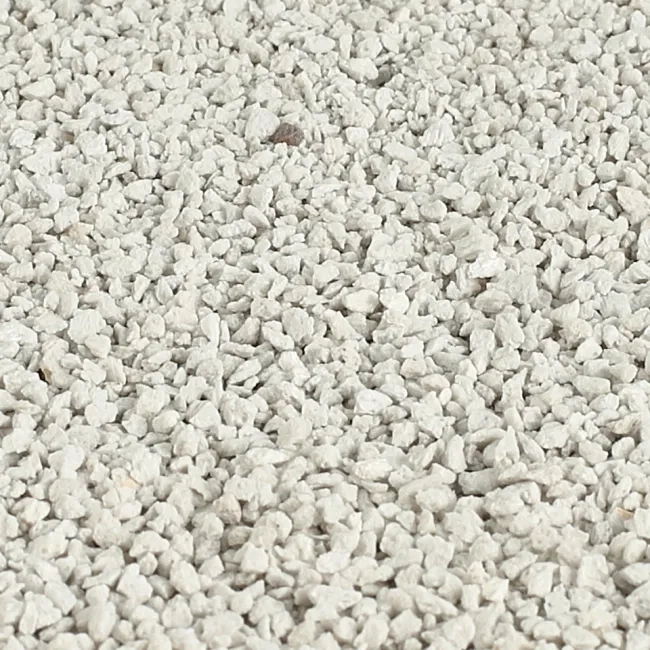


Filter-Ag Plus® filter media 28.3 L


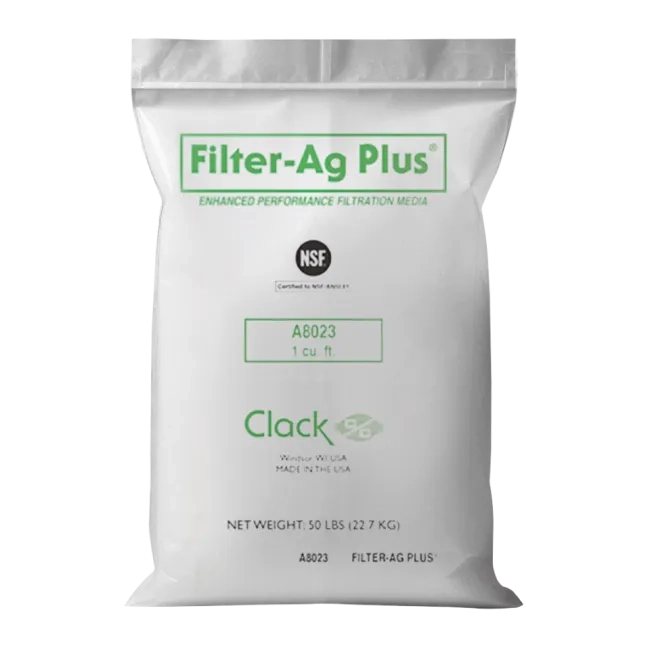
Filter-Ag Plus® filter media 28.3 L in UK


Product information
Filter-Ag Plus is a natural mineral clinoptilolite that possesses impressive advantages compared to those intrinsic to traditional sand and mixed filter media used for suspended solids reduction.
Technical information
Technical data
- Color - up to light gray to white
- Bulk density - 0,8 kg/dm³
- Real density - 2,2 kg/dm³
- Effective bead size - 0,55 mm
- Uniformity coefficient - 1,8
- Particle size - 0,6–1,4 mm
The operating parameters
- Max. feed eater temperature +60 °С
- Media layer high - 600–900 mm
- Free space in the filter - at least 50% of media
- Linear filtration rate - 30-48 m/h
- Linear flushing rate - 36-48 m/h
- Expansion layer backwash - 30-40% of media
How it works
Filter - Ag Plus is a filter media based on non-aqueous silica dioxide. It is designed to reduce contents of suspended particles having a size of 20-40 microns (sand, silt, etc.) in water.
The structure of the granules is angular, which contributes to a more active retention of particles, including iron in low concentrations.
Through a scanning electron microscope its granules look like polyhedrons with textured surface and microscopic pores with size larger than 3 microns. These features make their surface over 100 times bigger than that of quartz sand.
Angularity of the granules and tapering pores contribute to retention of dirt, silt and organic matter suspended in the water by means of flocculation, steric effect and adhesion. The textured surface and porosity provide larger surface to effectively retain the suspended impurities.
In the filtering process water enters the filter vessel, passes through a layer of media, which detains mechanical impurities (sand, rust, silt, etc.).
When contaminants "clog" the free space of the material, the pressure drop in the filter increases and the productivity drops. In this case, the Filter-Ag is flushed and back flushed with a reverse flow of water. After it, the filter is ready to purify the water again.
FAQ
-
What is Filter-Ag Plus® filter media used for?
Filter-Ag Plus® is used as a highly efficient filter media for reducing suspended matter. It removes dirt, silt, organic matter, and other particulate matter from water. It can also be used to reduce water turbidity and retain iron particles in low concentrations.
-
How does Filter-Ag Plus® improve water filtration?
Filter-Ag Plus® improves filtration through its clinoptilolite structure, large surface area, and microporous granules. It provides deep bed filtration, lower pressure loss, deeper sediment penetration into the bed, higher sediment loading, longer filter runs, and lower backwash frequency. It can typically reduce suspended solids to 5 microns or less.
-
What types of contaminants can Filter-Ag Plus® remove?
Filter-Ag Plus® reduces suspended matter, including dirt, silt, and organic matter. It is also used to reduce turbidity and can help retain oxidized iron floc in deironing systems.
-
Is Filter-Ag Plus® suitable for residential water treatment systems?
Yes. Filter-Ag Plus® can be used in pressure or gravity flow systems where quality water filtration and water conservation are important. It can also be used to replace multimedia in existing filter systems.
-
How much filter media is included in the 28.3 L package?
The 28.3 L package contains 28.3 liters of Filter-Ag Plus® filter media. The bag weight is 22.6 kg.
-
What are the main benefits of using Filter-Ag Plus® filter media?
The main benefits of Filter-Ag Plus® are deep bed filtration, lower pressure loss, longer filter runs, less out-of-service time, reduced backwash water use and lower backwash frequency, high service flow rates, lower equipment costs, and space savings. It can also replace multimedia in existing installations. Filter-Ag Plus® is an all-natural, environmentally safe product certified to NSF/ANSI/CAN Standard 61.
-
Can Filter-Ag Plus® help reduce sediment and suspended solids?
Yes. Filter-Ag Plus® is a highly efficient media for reducing suspended matter. It helps remove suspended solids such as dirt, silt, and organic matter, and deep bed filtration can typically reduce suspended solids to 5 microns or less.
Related products