

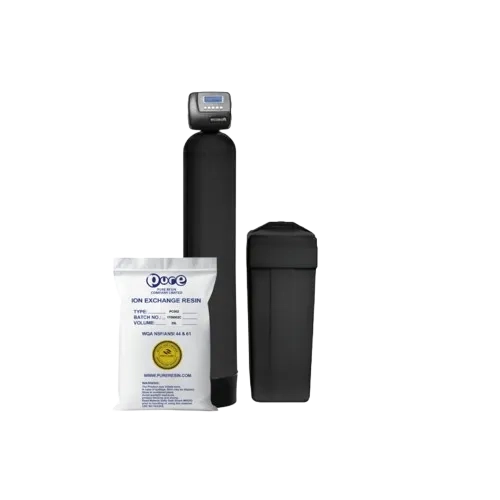

What is ion exchange?
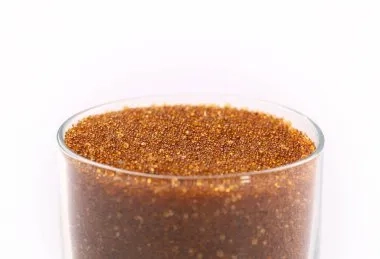
Ion exchange is a reversible process where charged particles (ions) in water are swapped for other ions held within a solid material — an ion exchange polymer. This process is the foundation of many ion exchange water filtration systems, from small household units to large-scale industrial plants.
Depending on the ions they exchange, resins are divided into:
- Cation exchange resins – remove positively charged ions such as calcium, magnesium, or heavy metals.
- Anion exchange resins – remove negatively charged ions such as nitrates, sulfates, or chlorides.
- Ampholytes – can perform both cation and anion exchange.
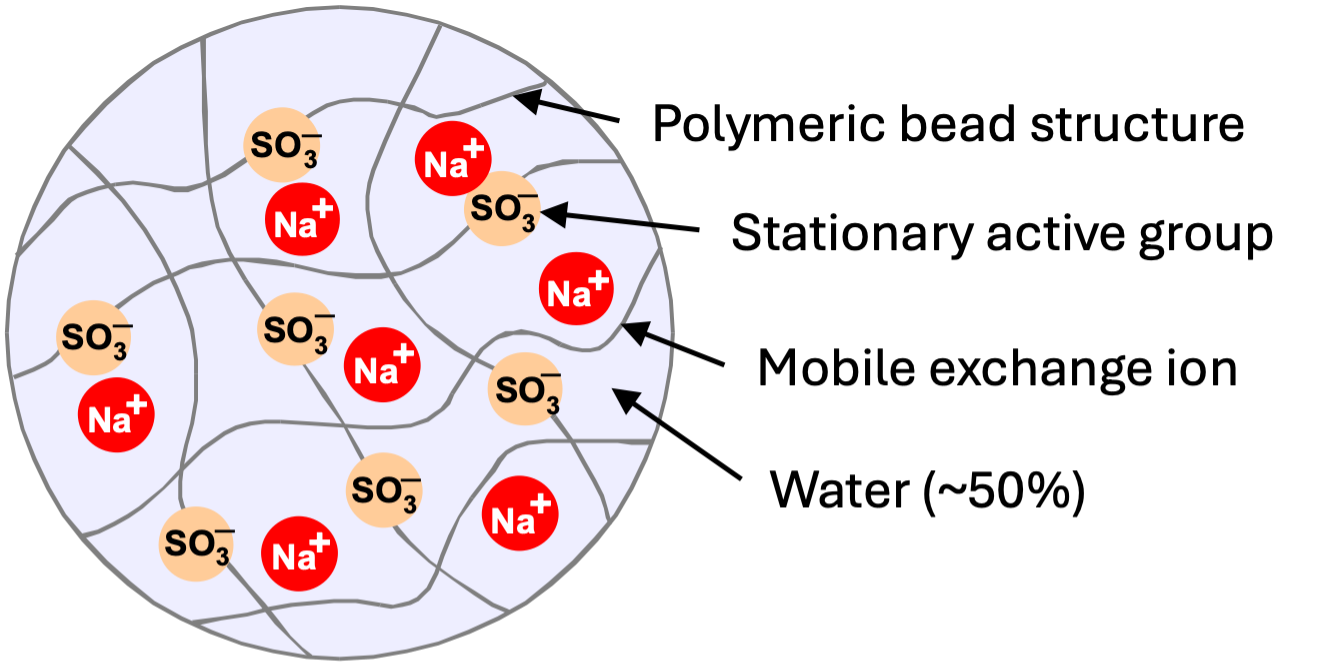
Types of ion exchange resins by polymer matrix
The core of any ion exchange filter water system is the resin’s polymer matrix:
- Styrene-divinylbenzene (SDVB): the most common, offering high stability, mechanical strength, and durability.
- Acryl-divinylbenzene (ADVB): different chemical resistance and mechanical properties.
Resins can also be:
- Gel resins: compact structure, pores form when swollen.
- Macroporous resins: permanent pore network, ideal for larger organic molecules and demanding conditions.
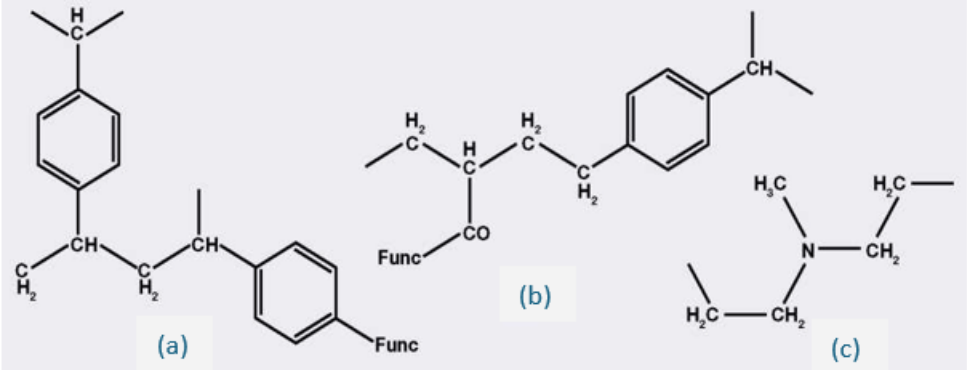
The structure of styrenedivinylbenzene (a), acryldivinylbenzene (b) and polyethylene polyamine (c) matrices of ion exchange resins
Functional groups and resin strength
Ion exchange resins are classified by the strength of their functional groups:
- Strongly acidic cation resins (-SO₃⁻) – work across a wide pH range.
- Weakly acidic (-COO⁻) – best for temporary hardness removal.
- Strongly basic anion resins – effective for most anion removal.
- Weakly basic anion resins – suited to acidic conditions.
Key characteristics when choosing ion exchange resins
When selecting resins for ion exchange water filtration, consider:
- Operating exchange capacity (OEC) – usable capacity under actual conditions.
- Swelling coefficient – affects water flow and exchange rate.
- Particle size distribution – monodisperse resins improve regeneration efficiency.
- Osmotic and mechanical stability – for long-lasting performance.
- Resistance to fouling – critical for natural water with organics.
Applications of ion exchange
Ion exchange filter water systems are used for:
- Water softening (removing calcium and magnesium)
- Demineralisation (almost complete removal of dissolved salts)
- Selective removal of heavy metals (lead, mercury, arsenic)
- Nitrate, ammonium, and organic pollutant removal
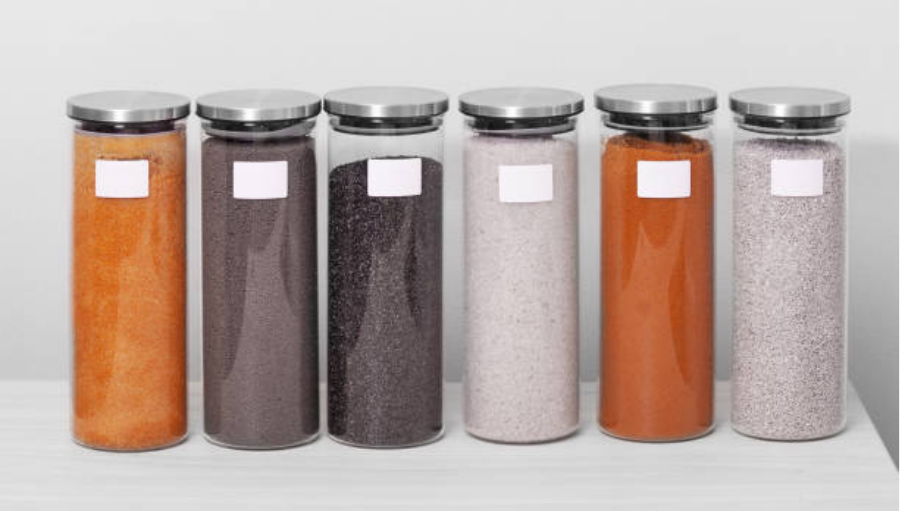
Regeneration of ion exchange resins
Once resins are saturated, they are regenerated with a regenerant solution:
- Co-current regeneration: water and regenerant flow in the same direction – less efficient.
- Counter-current regeneration: opposite flow – more efficient, uses less regenerant, produces higher-quality water.