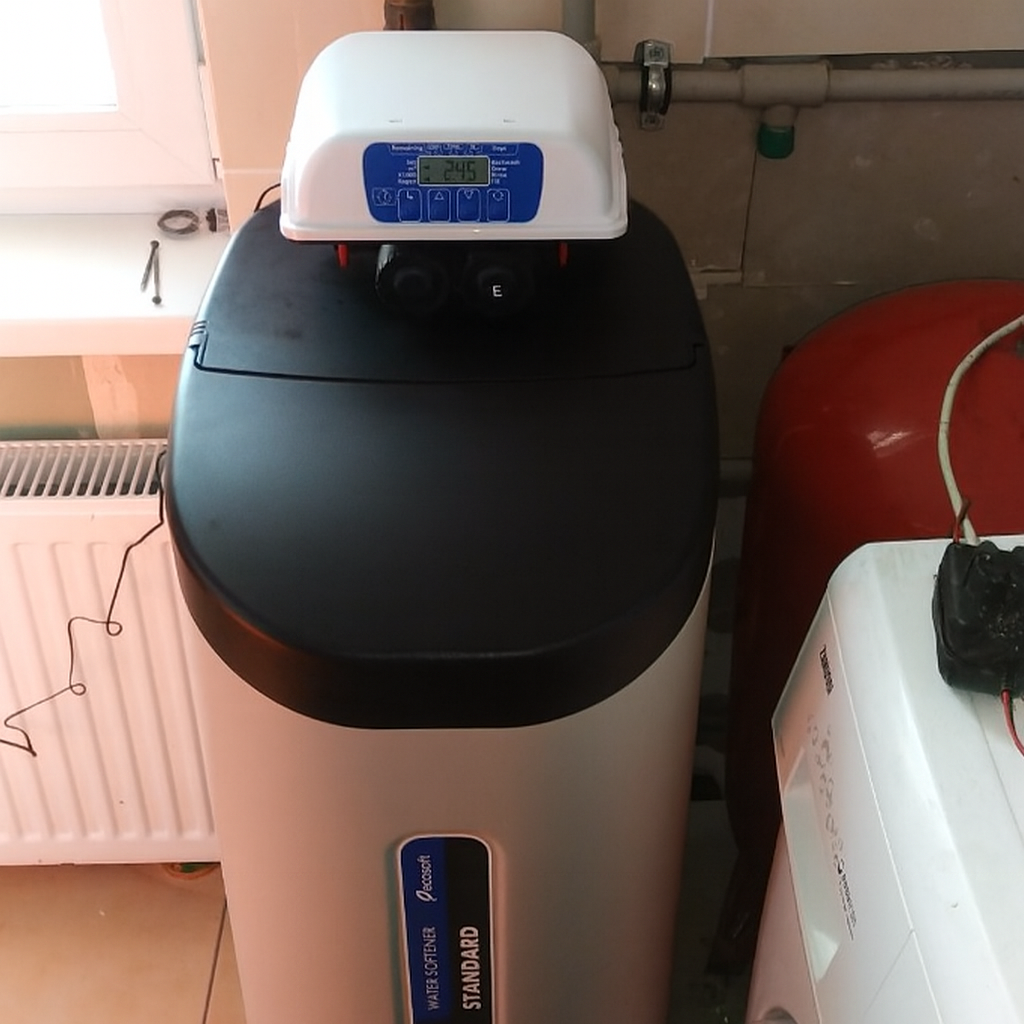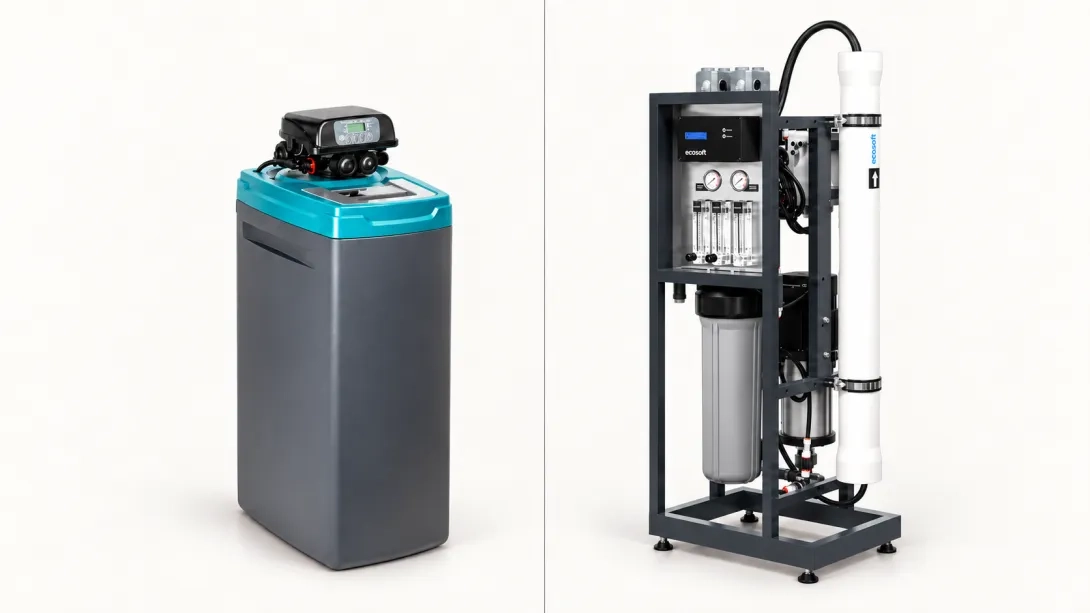
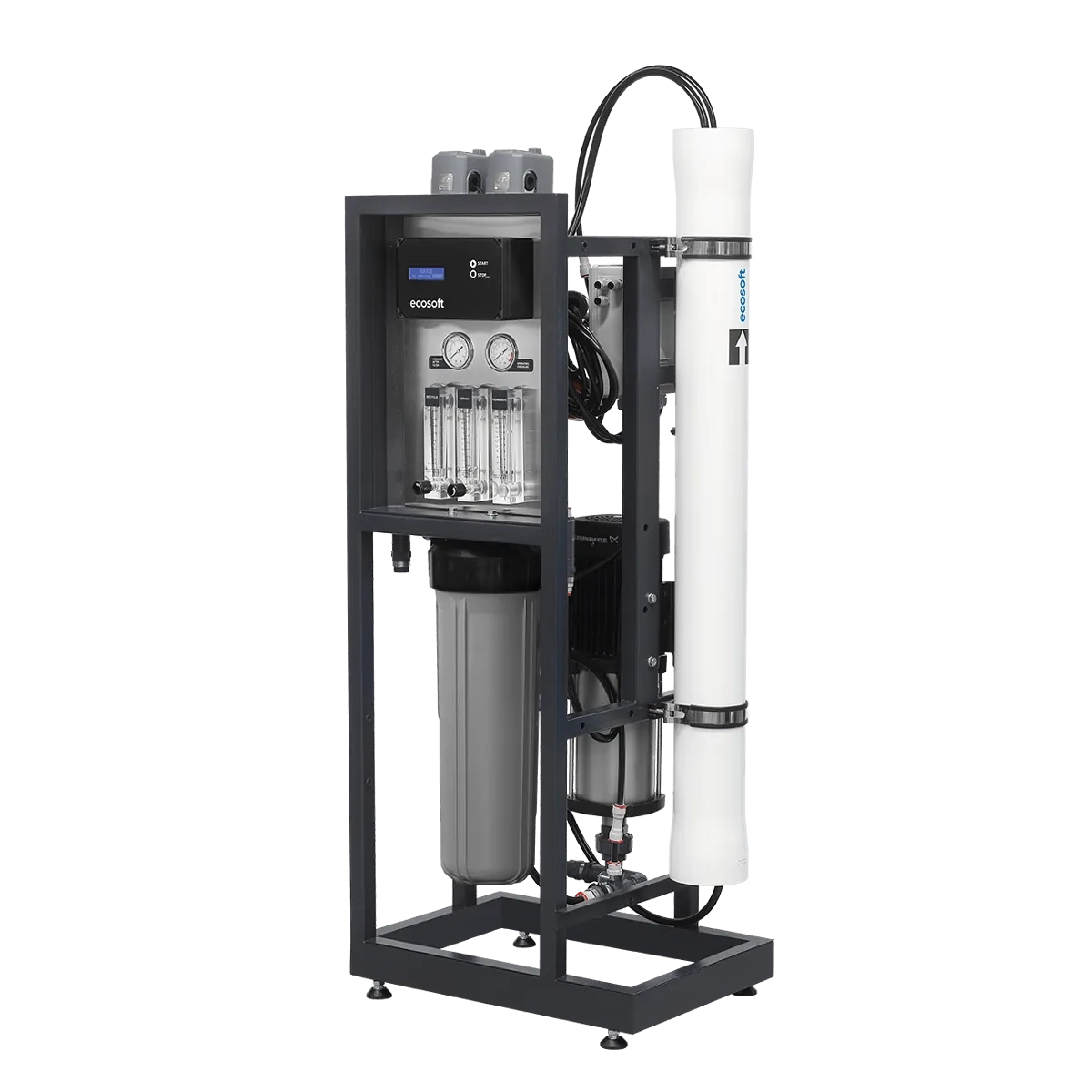
Modern water treatment suggests a range of solutions for quite different purification levels and with entirely dissimilar technologies. As water issues vary, Ecosoft provides a wide range of ready-to-use units, systems, and powerful industrial stations for all possible purposes. However, the top choices are reverse osmosis and water softeners, which are explained and compared in the article below.
How Water Softeners Work
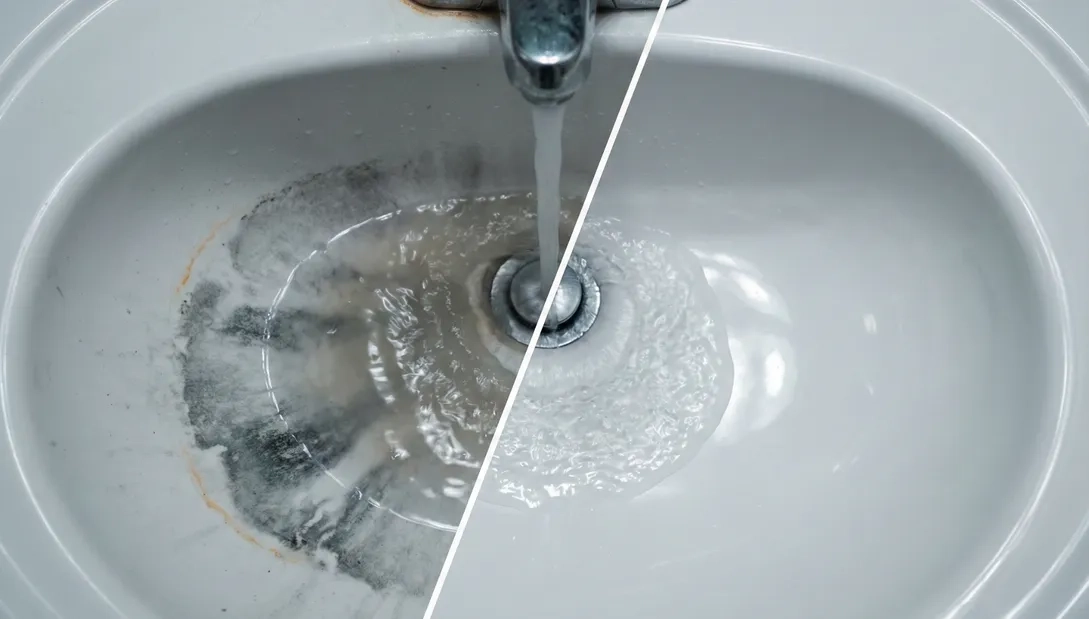
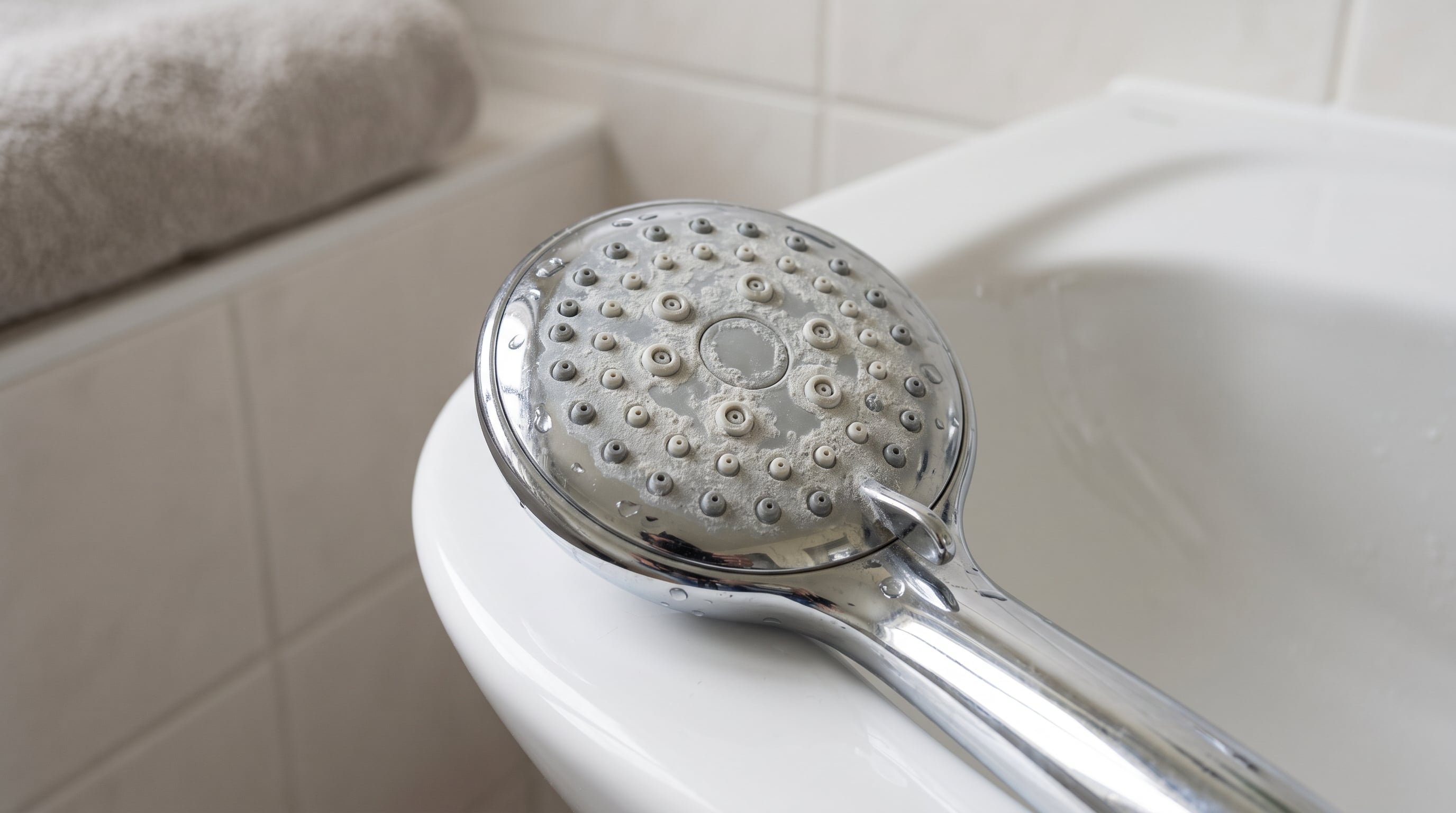
Hardness spoils beverage and meal taste, affects skin and hair, and damages plumbing, boilers, and kitchen appliances. Scale deposits appear on every surface contacting hard water. Softeners eliminate or completely remove hard minerals like calcium and magnesium through an ion exchange process.
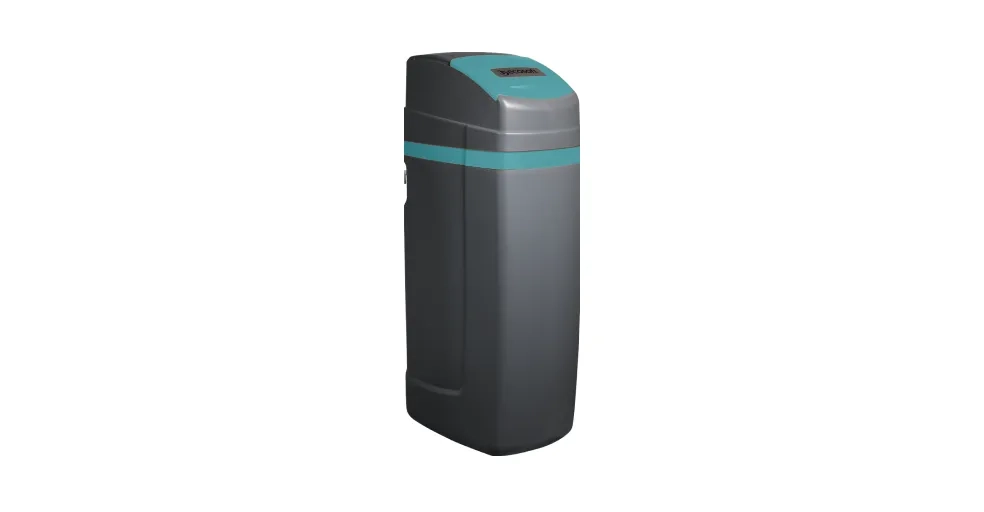
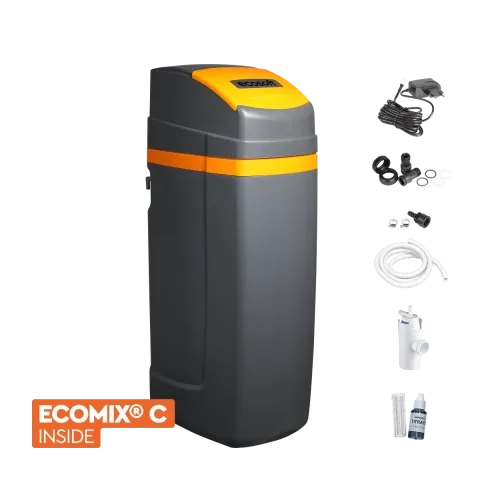
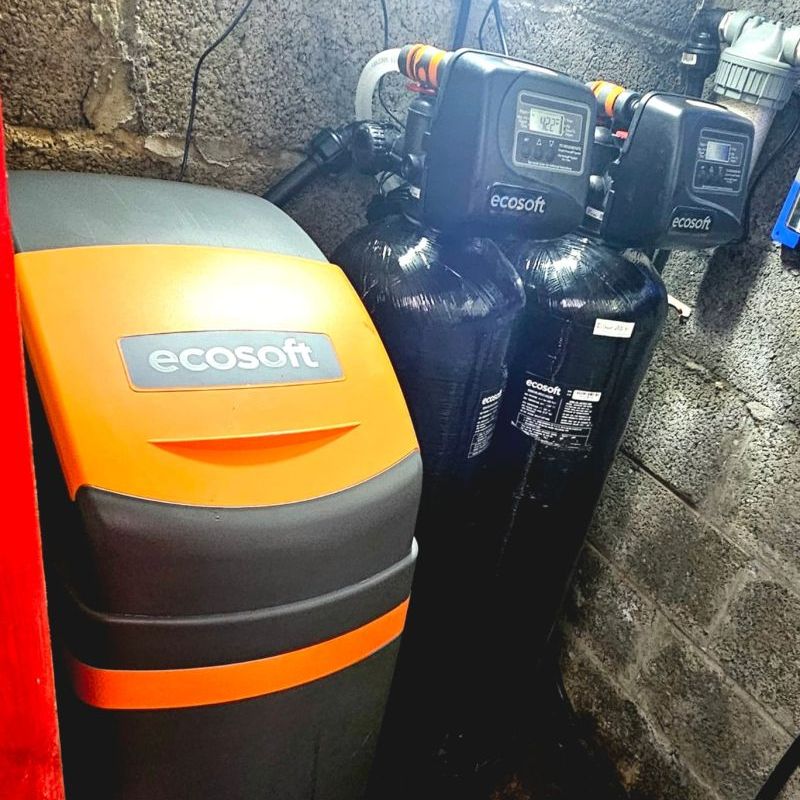
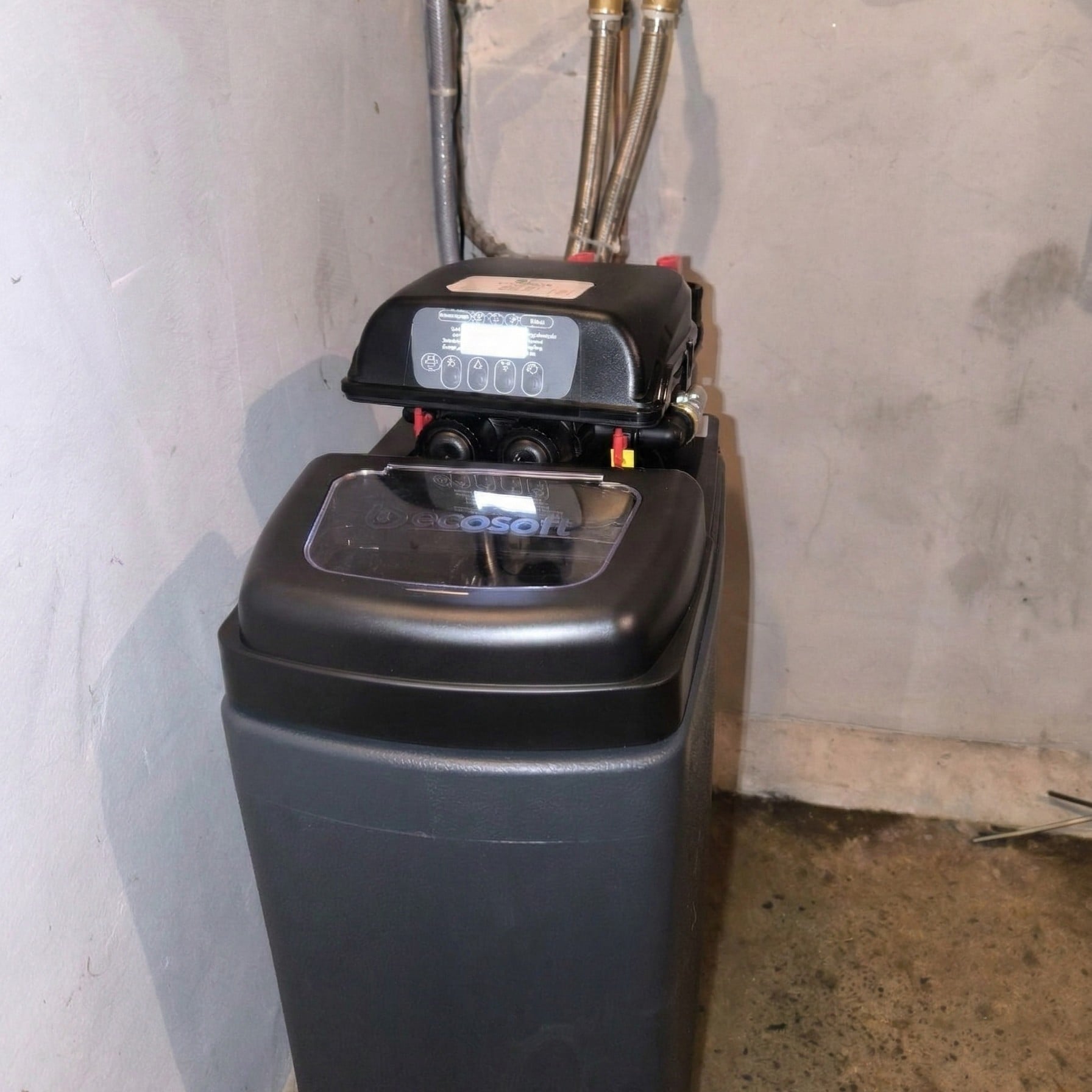
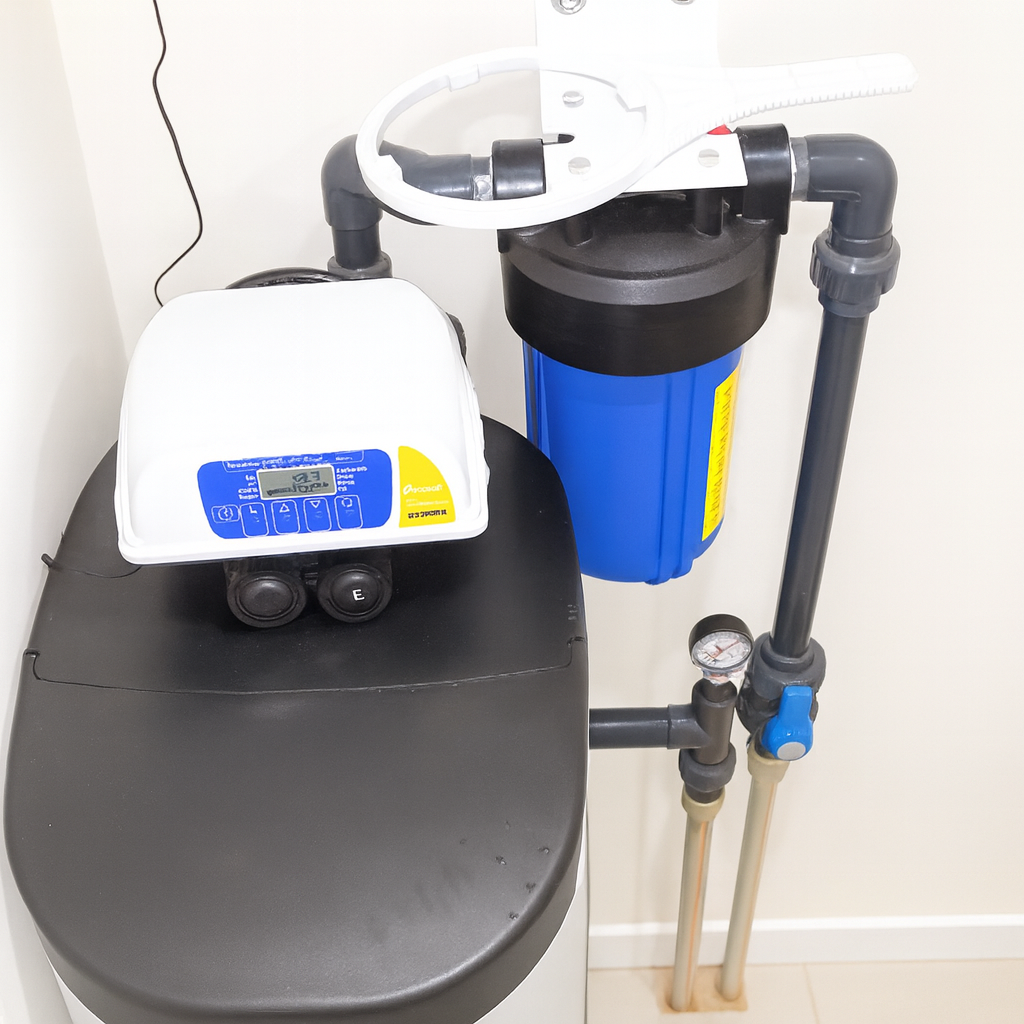
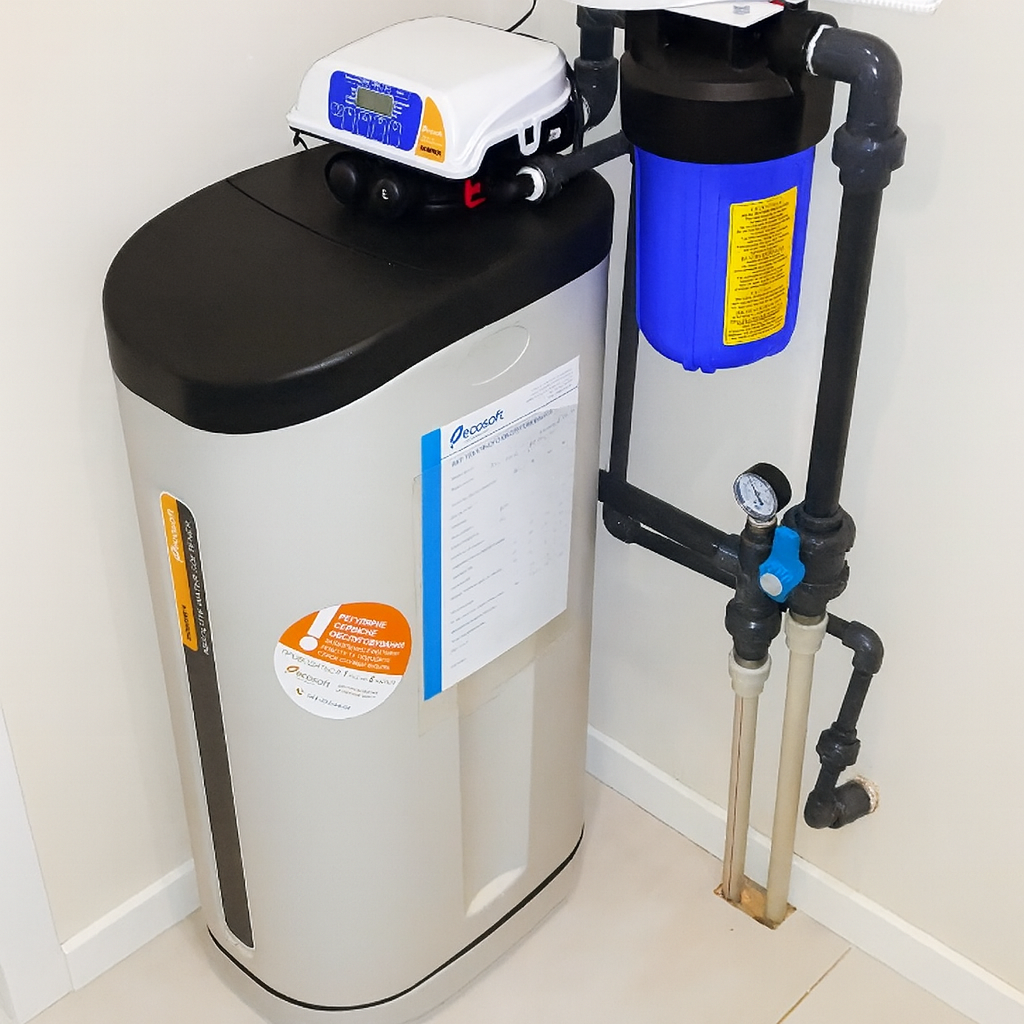
A standard water softener consists of a resin tank, a brine tank, and a control valve that manages the process. The water from the source is forced through the softener’s media, which is ion-exchange resin. The resin consists of beads charged with ions of safe minerals, typically sodium or potassium, which are monovalent elements with weak bonding. They are easily replaced by divalent ions of calcium and magnesium, which form stronger electrostatic bonds with ion-exchange resin beads.
As a result, water becomes soft, odourless, fresh, and enriched with natural minerals that do not change its taste and safety. On its part, the resin becomes saturated with trapped hard ions. Over time, it must be regenerated. The regeneration process is commonly automated. The brine flushes the beads to restore them for further purification. Calcium and magnesium are sent to the drain.
How Reverse Osmosis Systems Work
Water contaminants are diverse, including harmful bacteria, toxic chemicals, organics, and heavy metals. They enter natural water sources through human activities, industry, farming, old plumbing, soils rich in minerals, and groundwater containing radioactive elements. Drinking such impure water causes acute illnesses and long-term health conditions.
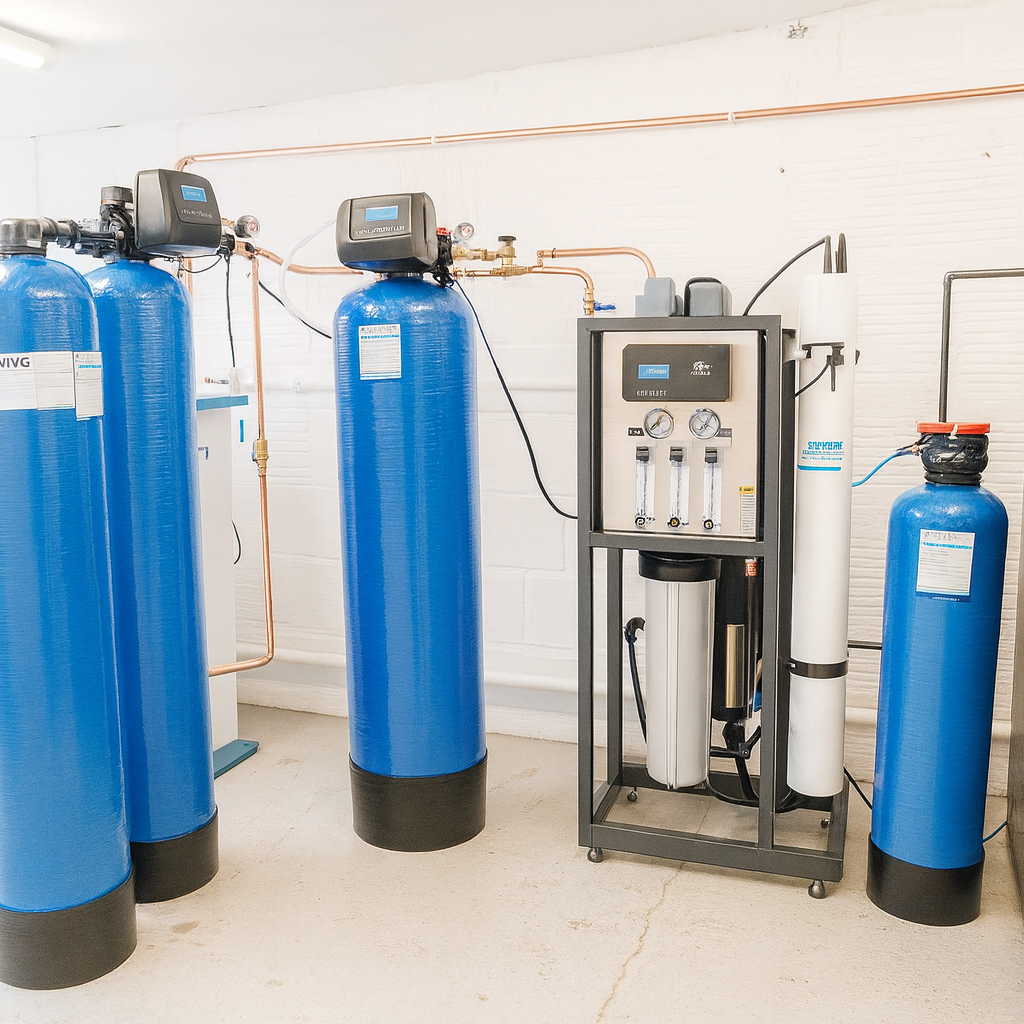
For protection, reverse osmosis filters are preferred. Their operating principle is based on the use of an RO membrane made of highly engineered polymer materials with the finest pores. The membrane consists of three layers that are able to separate molecules by size. Only the smallest water molecules pass through the pores. Over 99% of contaminants remain in the wastewater that is sent to the drain. Reverse osmosis is one of the most precise and effective water treatment methods available. Typically, units come with various flow rates, high energy efficiency, and multiple purification stages.
Key Differences Between the Two Solutions
Neither variant provides technically absolute purity. Still, they achieve a brilliant result and are widely used for household and commercial purposes. Which one to choose depends on the requirements for the water. We’d emphasise the following key differences between a basic RO system and a basic water softener:
- Purpose. RO systems remove hardness salts, dissolved mineral ions, bacteria, most viruses, pesticides, herbicides, pharmaceuticals, nitrates, natural organic acids, synthetic "forever chemicals” (PFAS), heavy metals like lead and arsenic, and some other contaminants. Sediment and carbon filters are usually added to the system to reduce large particles, chlorine, iron, odours, and colours. If you buy an Ecosoft RO unit equipped with ECOMIX media, you will remove iron too. Water softeners remove primarily calcium and magnesium. Also, when particular media are used, they can trap iron, manganese, aluminum, and lead.
- Treatment levels. An RO unit often suggests 5 purification stages provided by various water filters, like a sediment filter, carbon pre-filter, carbon block filter, RO membrane, and post-carbon filter. A standard water softener does not use multi-stage physical purification. Only a single ion exchange technology is involved.
- Maintenance. Water softeners are easier to maintain due to automatic flushing. An operator needs only to refill the salt when required and replace resin media every 5–10 years depending on water quality. To maintain RO systems, sediment and carbon filters should be replaced every 4–6 months, and RO membranes should be replaced every 1—2 years.
- Wastewater. An RO unit wastes more water than a water softener. To reduce the percentage of wastewater in RO systems, Ecosoft developed AquaGreen technology.
It is obvious that reverse osmosis systems provide wider protection, but they are pricier than water softeners and result in larger operating expenses.
Which Option Is Right for Your Home?
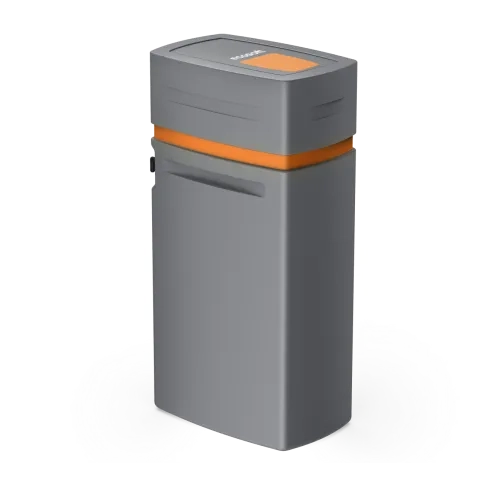
You cannot choose just one over the other, as these two technologies differ greatly. If you need to get rid of limescale solely, you should prefer home water softening systems. They prevent clogging of pipes and deposits of limescale, and therefore they save a lot of trouble. Softeners indirectly extend the service life of kitchen and other equipment. There are quite compact standalone units.
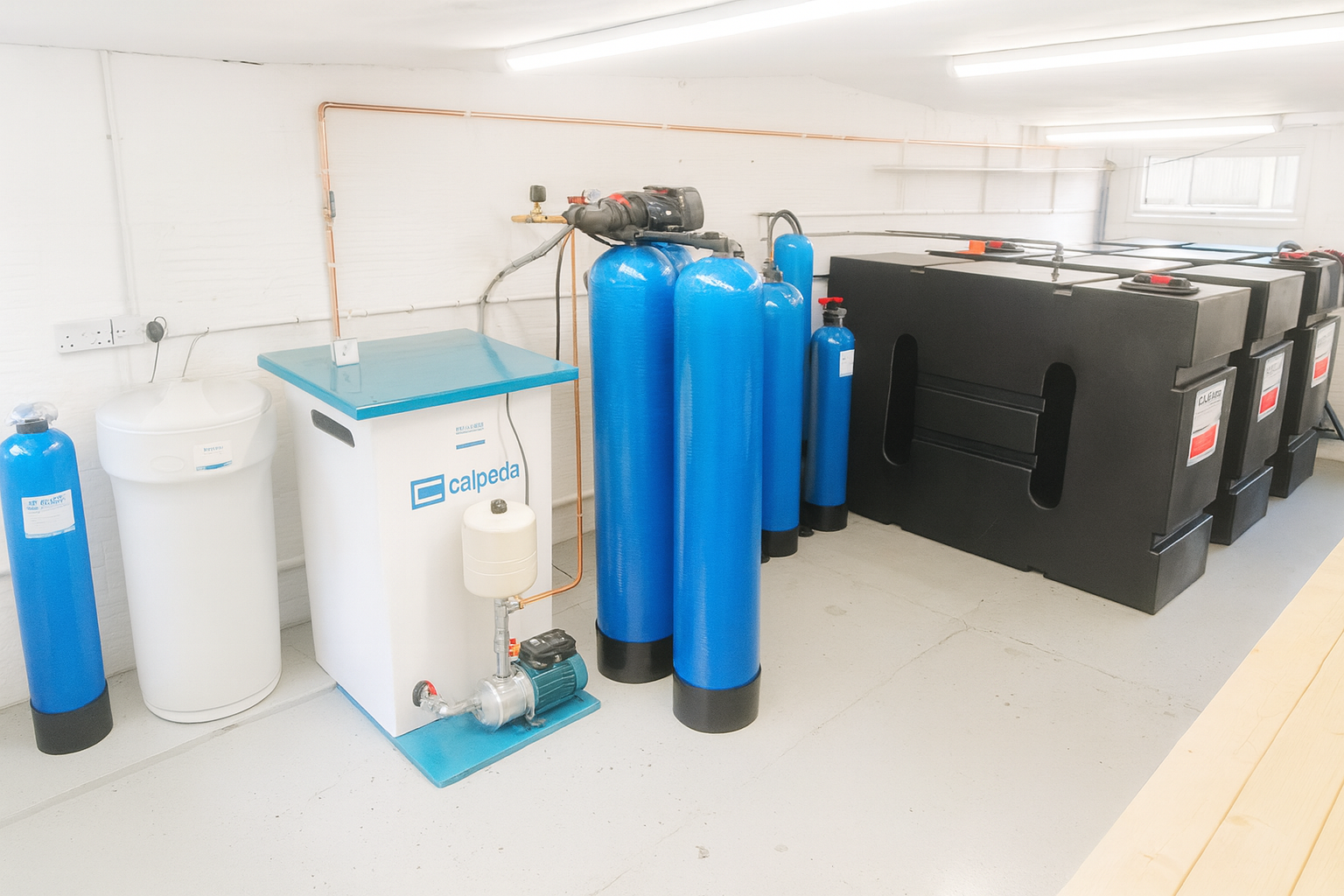
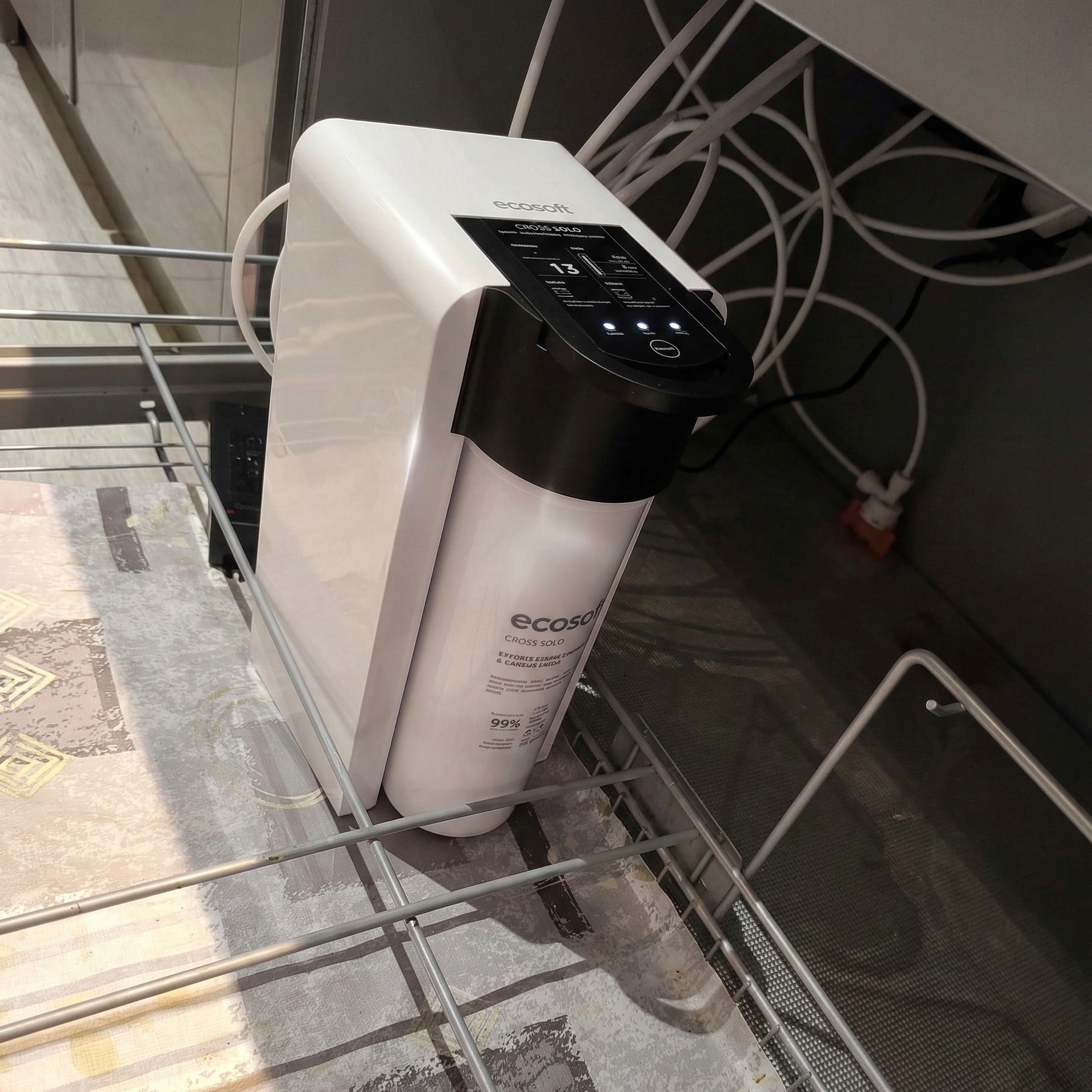
If the quality of water is very low and the requirement for it is very high, you should consider a reverse osmosis unit. It provides the most comprehensive water purification. Ecosoft ready-to-use systems are easily installed and do not require specific deployment. There are point-of-use and point-of-entry RO systems and softeners. Thus, you can install them beneath a kitchen or bathroom sink or connect units to the mains before water reaches a faucet or appliance. Installation is easy, but if you have no related experience, it is better to engage a professional.

Conclusions
It seems the water softener vs. reverse osmosis comparison is in favor of an RO membrane, at least because it removes more contaminants. However, if you do not need the highest level of water purification and your water supply is reliable and safe, a water softener is a more beneficial option. It is cheaper to buy and maintain. And it perfectly improves water composition and taste.