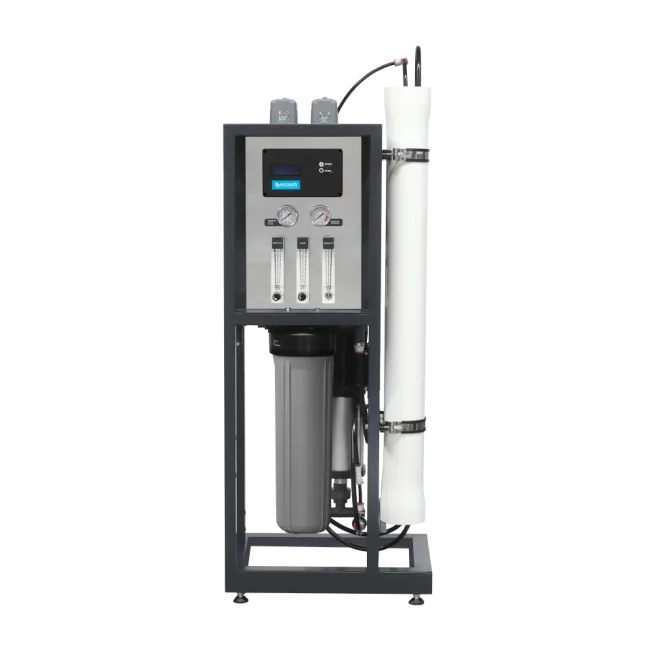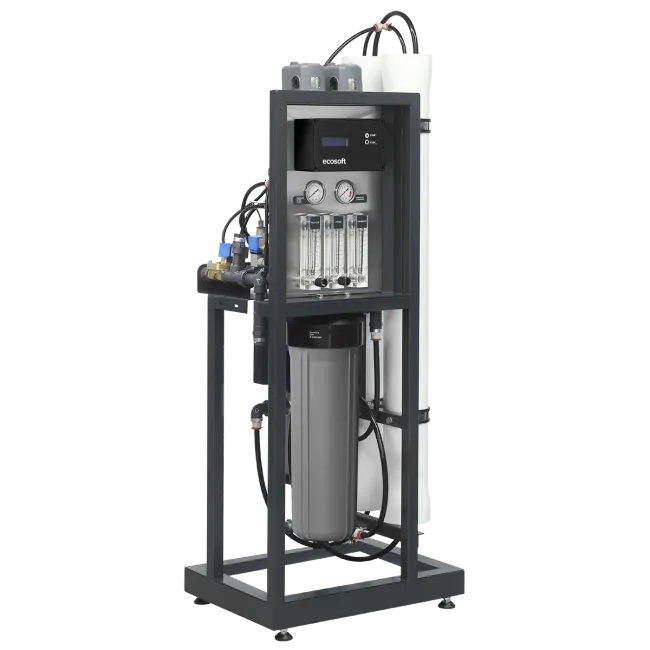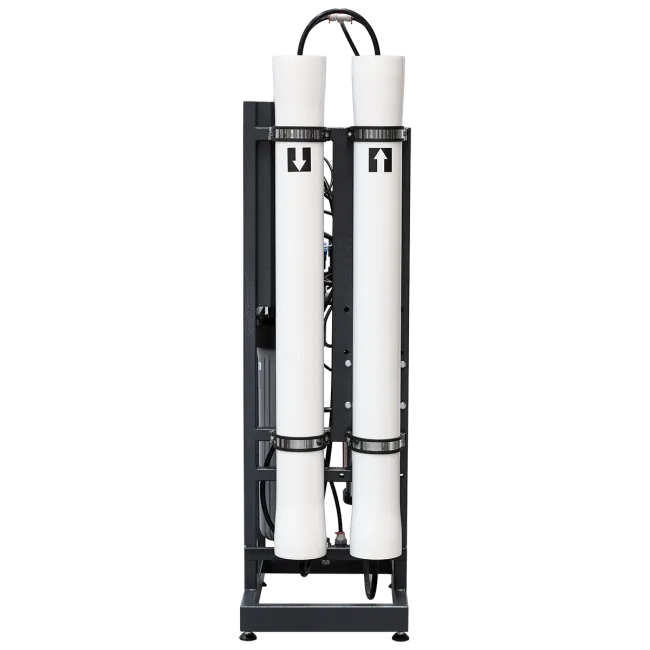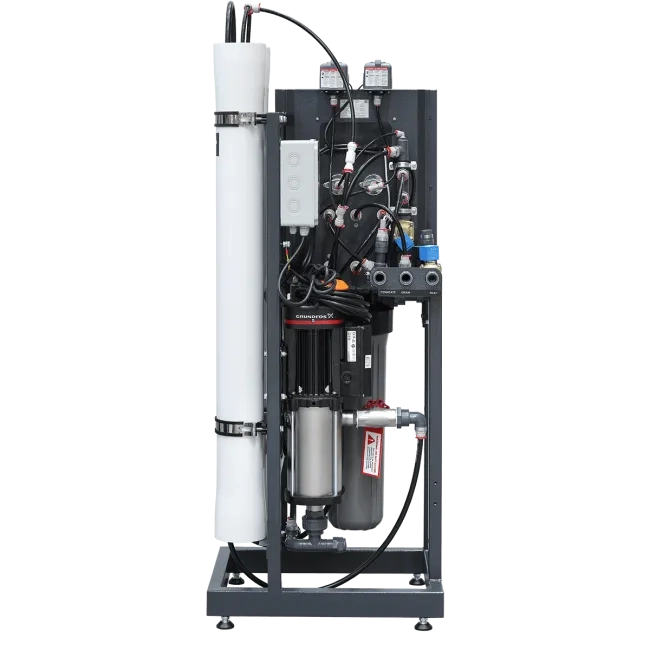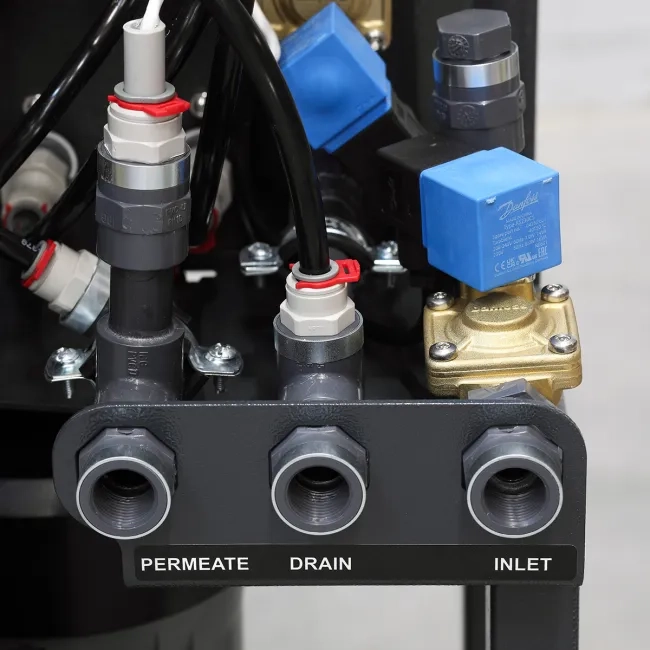


Ecosoft Professional MO12000 4″ reverse osmosis system

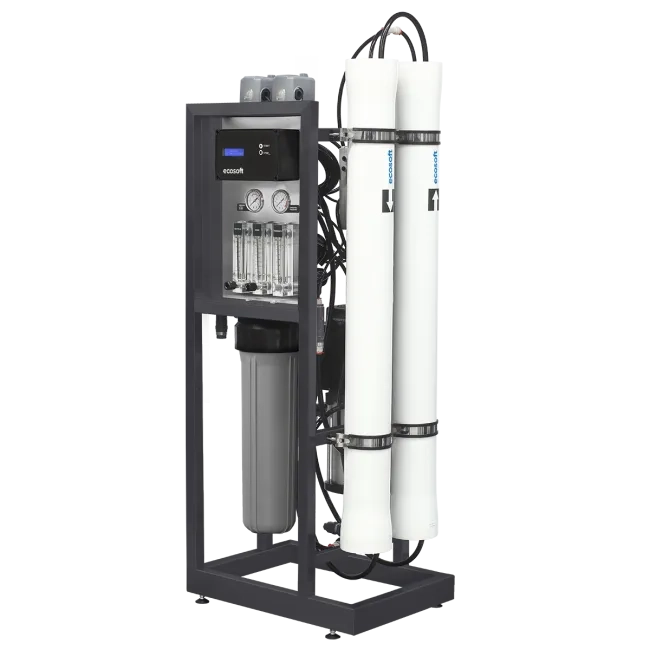
Ecosoft Professional MO12000 4″ reverse osmosis system
- Flow capacity: 500 L/h
- Reliable and stable performance
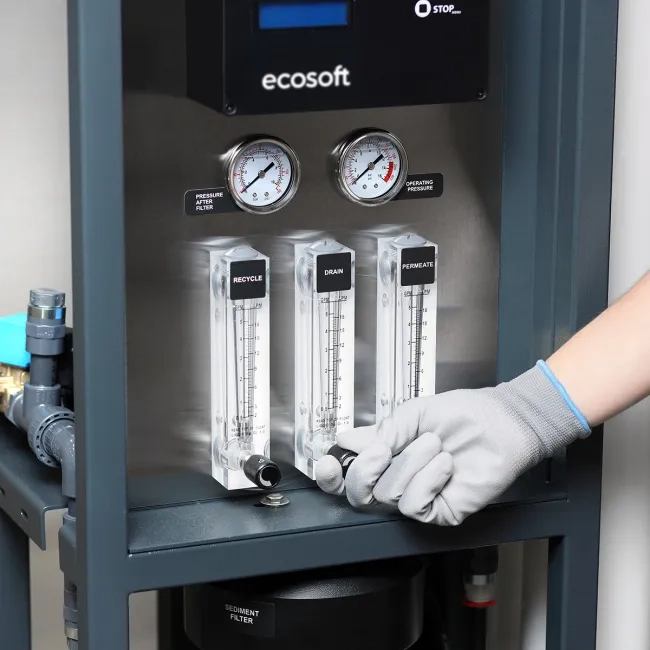
- Flexible flow adjustment for various feed water
- Pre-designed options for tailor-made solutions
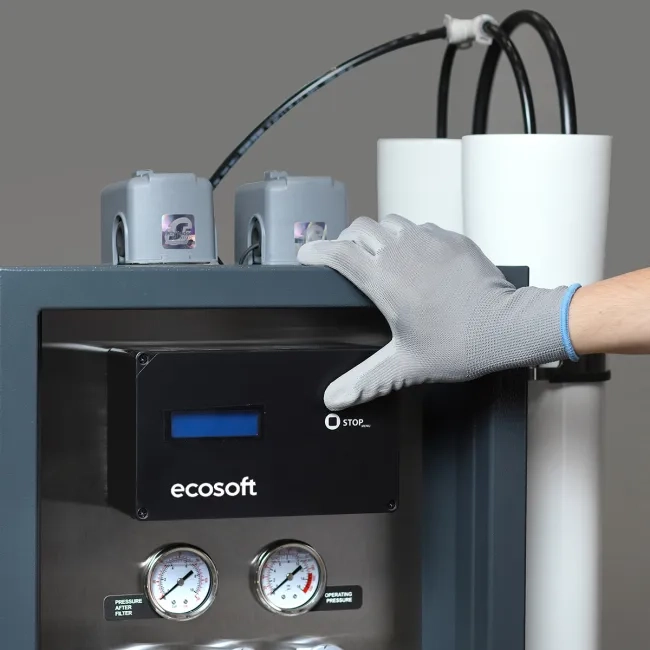
- Reliable Ecosoft OC5000 controller
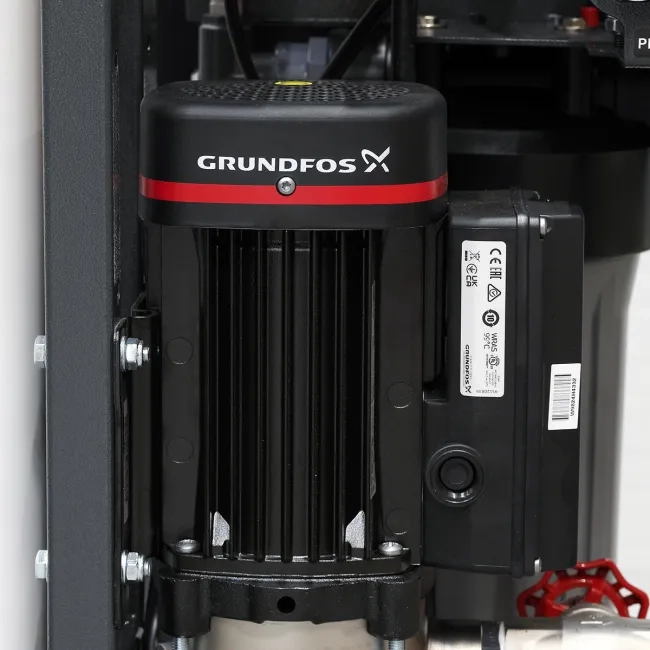
- Energy-efficient and quiet Grundfos® pump


Product information
MO12000TP5 is the most energy-efficient and cost-effective system. It provides the highest output with the lowest energy use — only 0.67 kW to produce 500 liters per hour. Using this system can deliver savings of more than 500 euros per year compared to other competitive models. Pre-designed and convenient options for permeate flushing and blending assembly allow the system to handle any water treatment task, even with complex water. The system design and reliable components enable continuous 24/7 operation.
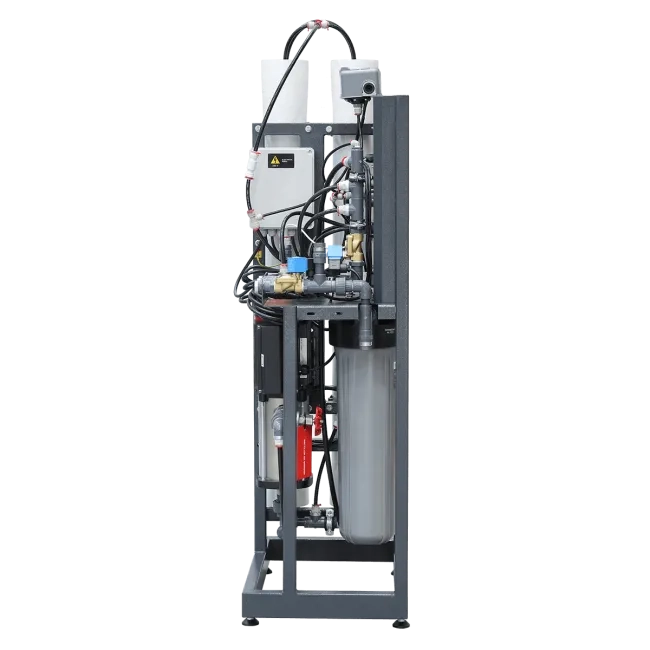
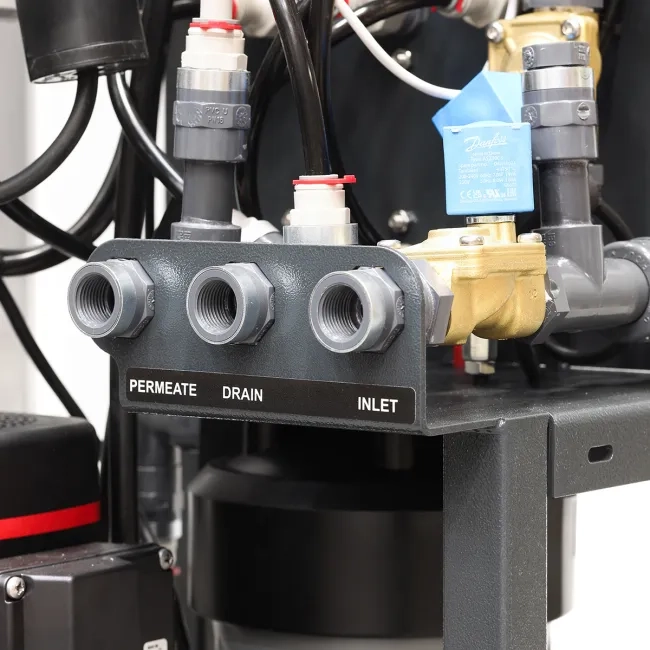
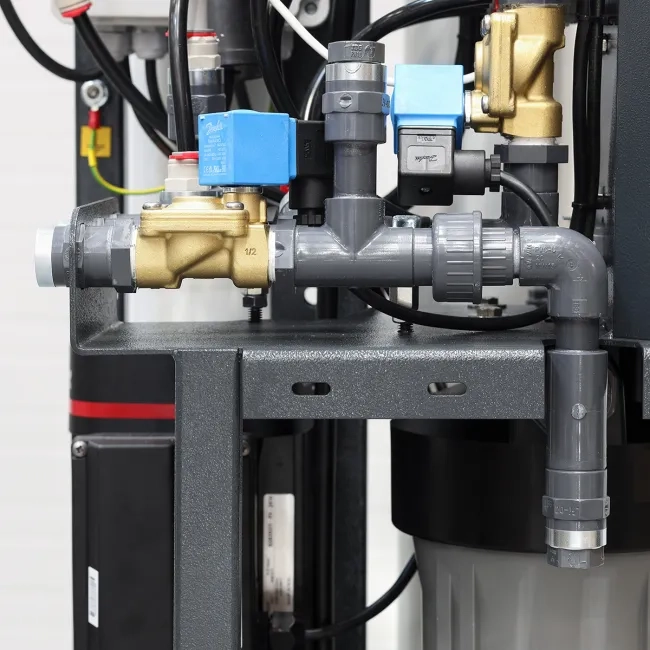
Its open-frame design ensures quick maintenance access, while the OC5000 controller allows full customization to suit specific applications and conditions. Permeate flushing extends the service life of membrane elements by up to 30% and significantly reduces the load on pre-filters.
The blending assembly enables mixing from any point in the water purification system or even from another water source. The lowest energy costs, combined with a compact and stylish design, make this system popular for car washes, hotels, laundries, and water bottling. It also provides clean water to large cottages, private houses, and restaurants. In addition, the MO12000TP5 is a reliable choice for light production such as bakeries, breweries, wineries, and cheese or sausage production.


Technical information
To ensure maximum efficiency of the Ecosoft reverse osmosis system, regular replacement of filter elements is required. Proper maintenance guarantees high water quality and extends the service life of your system.
Cartridge replacement schedule:
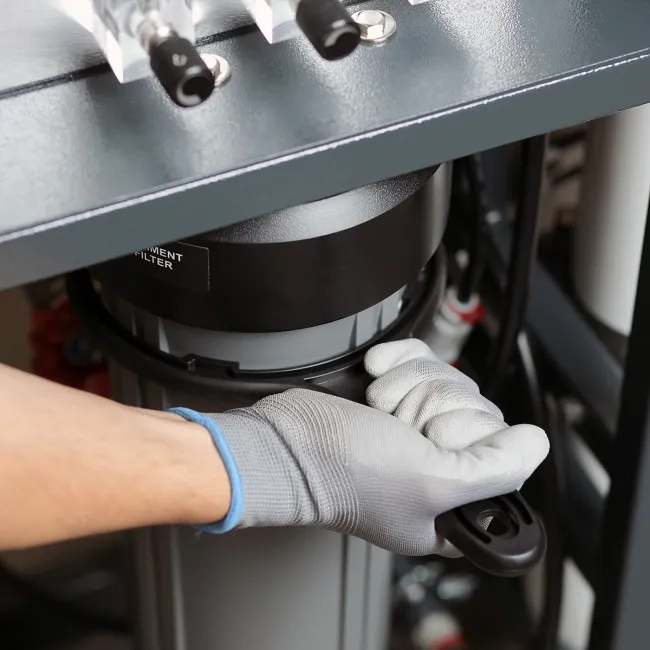
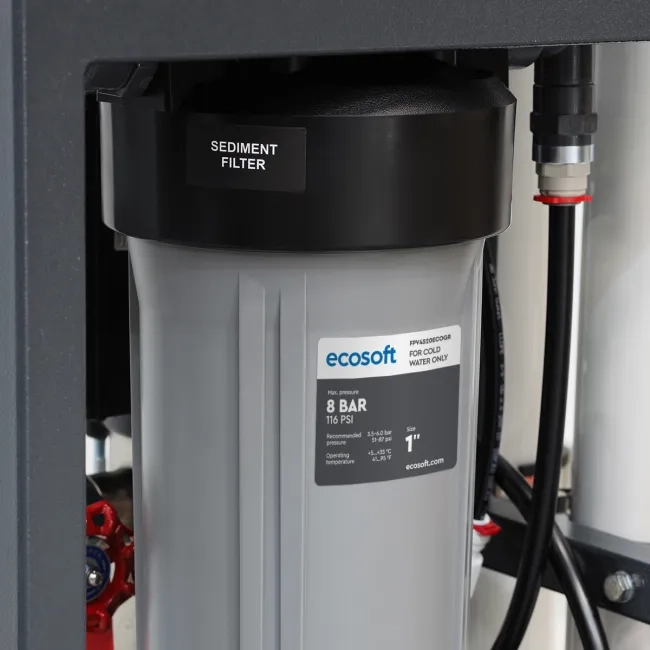
- Ecosoft PP melt-blown sediment filter, 4.5″ × 20″, 5 µm – replace every 4 months, or if the pressure drop reaches 0.5 bar
- Membrane element – replace or clean every 6 months if productivity decreases by more than 15–20%, water quality worsens by 15–20%, or pressure drop increases by 15–20%
You can replace cartridges and membrane elements yourself, but for best results we recommend contacting an authorized service center.
If you decide to carry out the replacement yourself, follow the instructions below:
⚠️ Use sterile rubber gloves when handling membrane elements
⚠️ If high microbiological purity is required, disinfect the reverse osmosis system and the permeate tank before installing the membrane

Membrane holder cap
1 – Screws, 2 – Locking half-rings, 3 – End cap, 4 – Sealing ring, 5 – Sealing ring for the end cap.
Remove the membrane element(s) from the factory packaging. To replace the old element with a new one, disconnect the pipelines and remove the membrane holder(s) from the frame.
⚠️ Pay special attention to the sealing ring of the end cap (5). If the seal is missing, permeate and concentrate streams may mix.

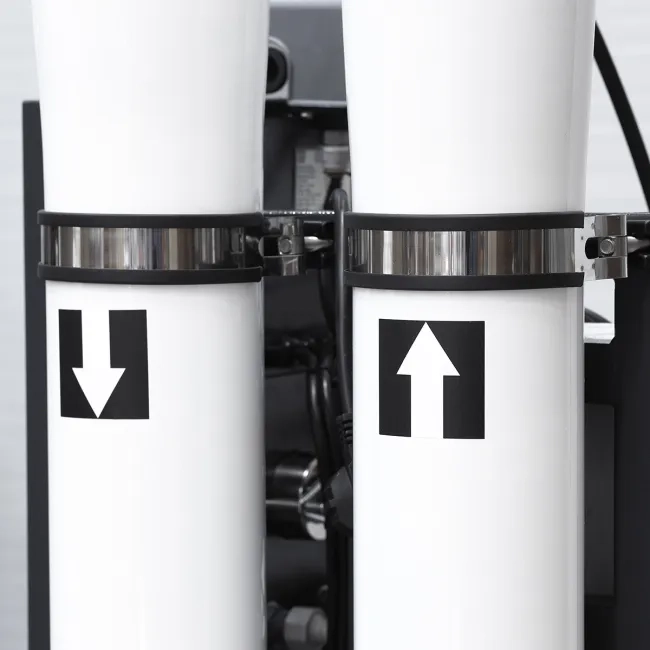
After removing the end cap, install the membrane element in the direction of the arrow marked on the membrane holder (from the inlet water side). The membrane element must be inserted into the holder with its sealing ring aligned with the inlet connection of the holder head.
After installation, secure the holder head with screws and locking elements to the holder body, then reconnect the pipelines for feed water, concentrate discharge, and permeate outlet on the membrane holder. Fix the membrane holder to the reverse osmosis system frame.
During the first system startup, the initial portion of permeate must be discharged to the sewer, with a minimum discharge time of 15 minutes.
💡 When installing the membrane, pay attention to the direction of the arrow on the membrane holder.
💡 If necessary, use glycerin as a lubricant.
Consumables
-
€ 699.17 excl. VAT€ 839.00 incl. VAT
-
€ 815.83 excl. VAT€ 979.00 incl. VAT
-
€ 615.83 excl. VAT€ 739.00 incl. VAT
-
€ 574.17 excl. VAT€ 689.00 incl. VAT
-
€ 299.17 excl. VAT€ 359.00 incl. VAT
-
€ 328.33 excl. VAT€ 394.00 incl. VAT
-
€ 26.58 excl. VAT€ 31.90 incl. VAT


FAQ
-
-
What are the advantages of the Professional line?
The Professional line offers several advantages:
- components from leading global manufacturers ensure reliability
- modular design enables easy connection of a dosing station and options such as permeate flushing or raw water blending for different water qualities
- technical support from Ecosoft experts and a 12-month warranty
-
How can I calculate the capacity of the MO12000TP5 for my setup?
You can estimate the system performance using the graph provided in the Ecosoft Professional MO12000TP5 RO technical data sheet in the Downloads on this page (left sidebar).
To calculate the permeate flow rate at 25 °C and feed water TDS of 1,500 mg/L, refer to the chart below:

Ecosoft MO12000TP5 flow rate chart- On the FEED WATER TDS axis, mark the point corresponding to 1,500 mg/L (1).
- Draw a line to intersect the curve for 25 °C (2).
- From the point of intersection, draw a line toward the PERMEATE FLOW RATE axis (3).
The result is approximately 480 L/h.
To get the most accurate estimate, a complete feed water analysis is required.
If you already have this analysis and know the water temperature, feel free to send us the data. We will calculate the performance using specialized software such as Wave from DuPont or QPlus from LG. Contact us at [email protected] — we look forward to your requests.
-
What water quality can I expect after filtration?
To determine the quality of water after the system, you can use software to calculate the operating parameters and expected purity.
Projection tools like Wave from DuPont and QPlus from LG allow for detailed modelling. You can also use the Ecosoft RO calculator to get an approximate estimate based on basic input data.
If you would like support with this, send your feed water parameters to [email protected] — we’ll be happy to help.
-
What does the MO12000TP5 system marking mean?
The model name MO12000TP5 contains information about the system's specifications:
- MO – product range name
- 12000 – average daily capacity (12 000 L/day)
- T – tap water application
- P – powder-coated frame and plastic pressure line
- 5 – Ecosoft OC5000 controller
-
Can the system operate 24/7?
Yes, the MO12000TP5 is designed for continuous 24/7 operation in commercial environments.
Its robust Grundfos® pump and stainless steel frame ensure long-term durability.
The OC5000 controller manages automatic on/off cycles, flushing, and dry-run protection to safeguard the system.
The open-frame design allows quick and easy maintenance to reduce downtime.
-
Which membrane elements are the best for the MO12000TP5?
If you choose a professional line of commercial reverse osmosis systems, it makes sense to get the most out of it.
For complex water and extended service life, DuPont membrane elements are recommended.
If you require higher capacity, we suggest using DuPont FilmTec XLE PRO 4040.
If your priority is better quality of purified water, DuPont FilmTec LCLE 4040 can be used.
To get an estimate of the water quality you will receive, contact us at [email protected].
-
What kind of pre-treatment is required before the system?
If you use tap water as a feed source, it must be pre-filtered from fine particles and chlorine before entering the RO system. Well water may contain hardness, iron, manganese, silica, or hydrogen sulfide — all of which can quickly damage the membrane. Some of these issues can be addressed by using an antiscalant.
We recommend performing a detailed laboratory analysis of your well water. For tailored advice, feel free to contact us at [email protected].
-
What is the best way to remove hardness before reverse osmosis?
Removing hardness salts before the reverse osmosis system is the most effective solution. This can be done by using a softener.
If your feed water is more complex and contains not only hardness but also iron, manganese, or TOC, we recommend using Ecomix® filtration media.
Antiscalants can also be used effectively in industrial systems with a capacity of more than 2.0 m³/h.
-
Which type of tank is better to install after the system?
An open tank is the most common solution, especially if the required water flow exceeds the system capacity by three times or more. It is commonly used in private houses and car washes.
A pressure tank is suitable when the required water flow is short-term and does not exceed twice the system’s hourly capacity. It is typically used in restaurants and cafés.
-
What tank volume is recommended after the system?
For an open tank, the volume should be at least equal to the hourly capacity of the system.
For the MO12000TP5, the minimum recommended tank size is 400–600 L. The maximum hourly water demand of the consumer should also be taken into account.
A pressure tank is usually selected based on actual needs, with a minimum volume of around 80 L. Keep in mind that such tanks typically store only half of their total declared volume.
Only pressure tanks specifically designed for reverse osmosis water should be used. These are constructed to prevent direct contact between the water and any metal parts.
For large water needs, two or more pressure tanks can be installed in parallel. Each tank should be equipped with a check valve and a shut-off valve.
-
Can I connect multiple tanks after the system?
Yes, it is possible to connect two or more tanks to a single system.
If you have such a need, contact us via the contact form or by email at [email protected], and we will recommend the best solution.
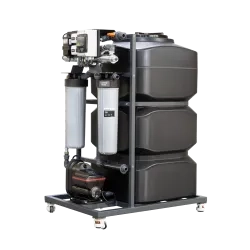
We also suggest considering a ready-made option for this purpose — the Ecosoft Smart Water Keeper 500 L water tank.
-
What are the advantages of the Grundfos pump in this system?
The Grundfos pump used in this model offers several advantages:
- low energy consumption (0.67 kW)
- low noise level (55 dB)
- built-in dry-run protection
- high operating pressure (up to 16 bar)
- global manufacturer’s warranty from Grundfos
Related products