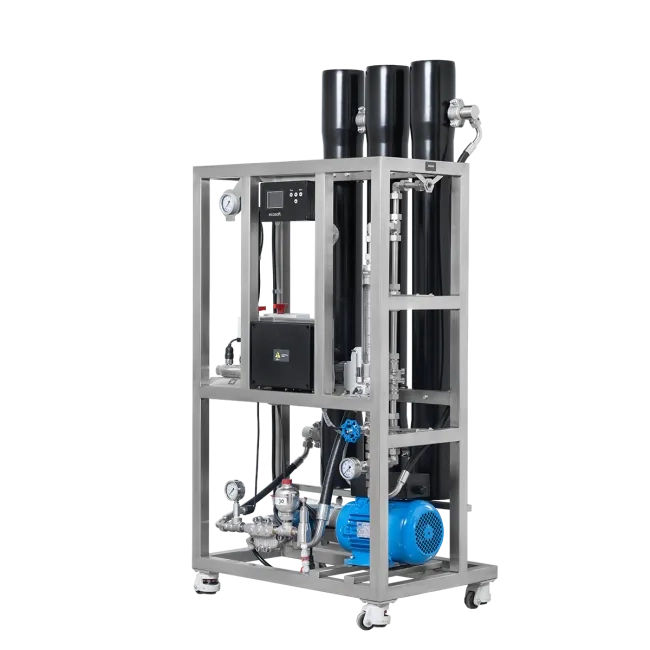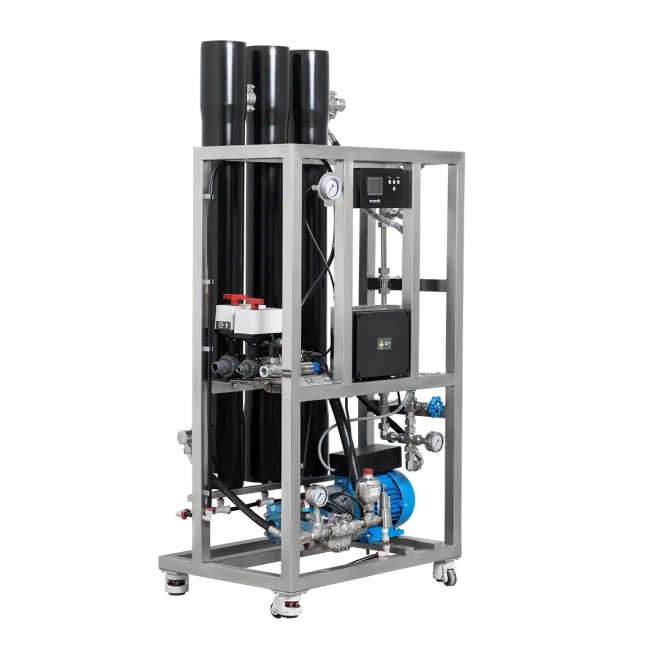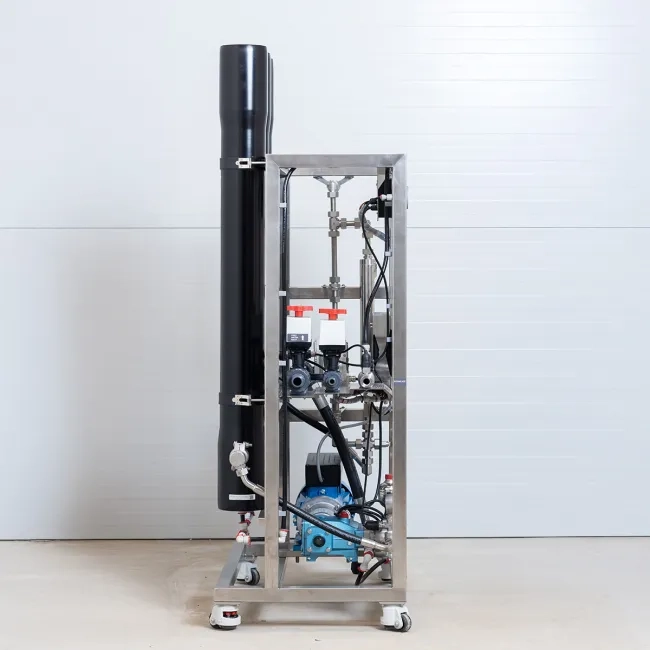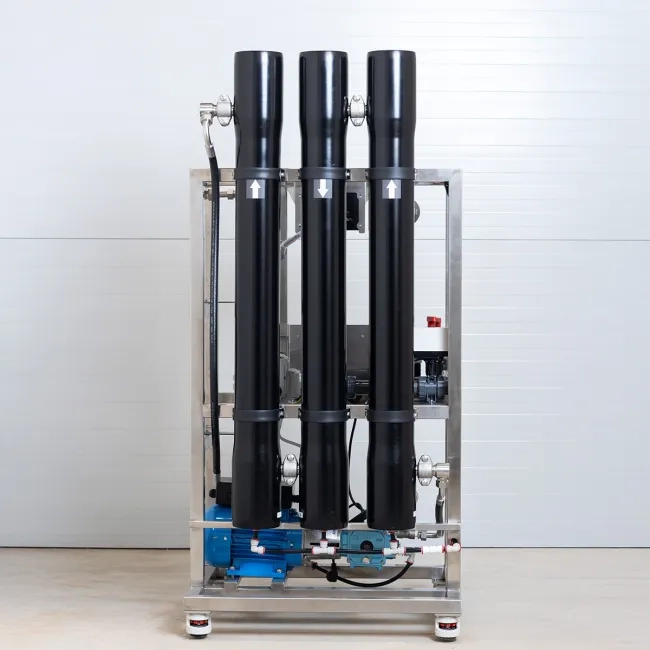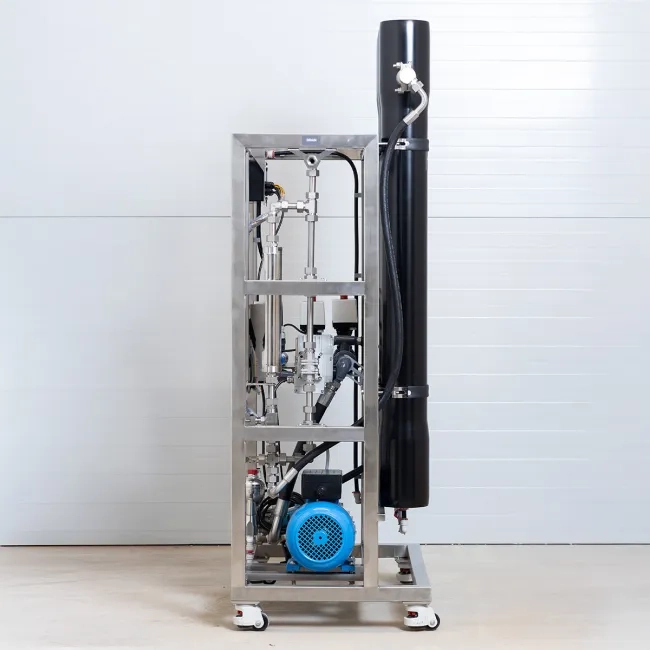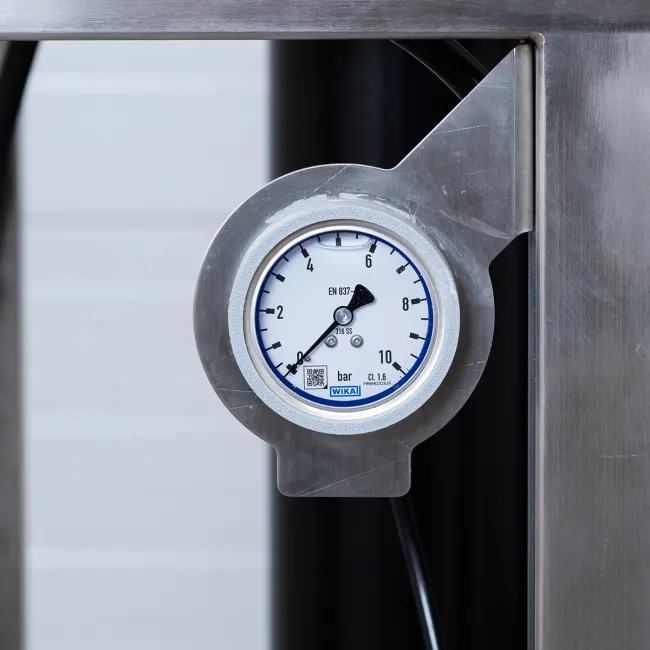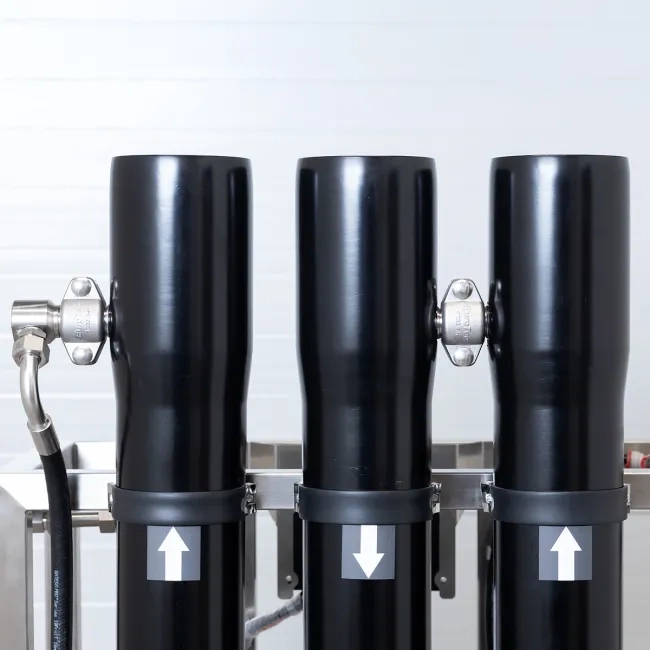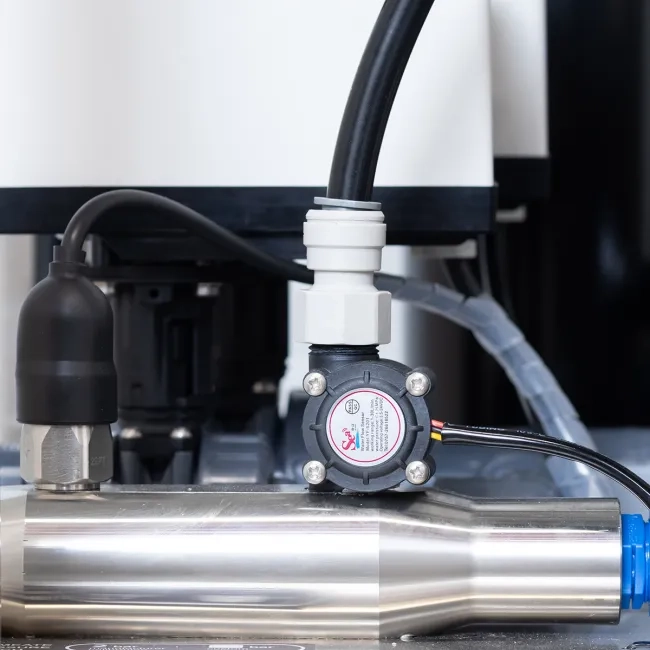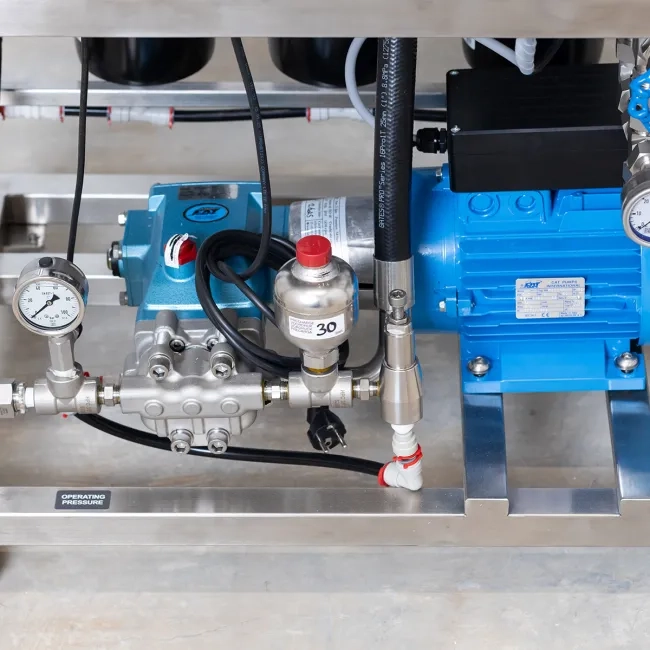


Ecosoft sea water MO10000BI6 4" reverse osmosis system

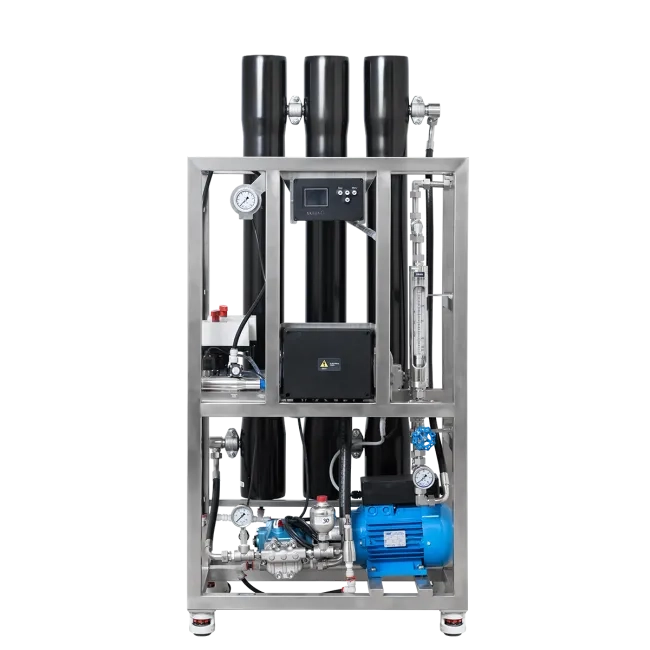
Ecosoft sea water MO10000BI6 4" reverse osmosis system
- Flow rate: 260–400 L/h
- Suitable for potable use due to Filmtec Seawater membrane elements
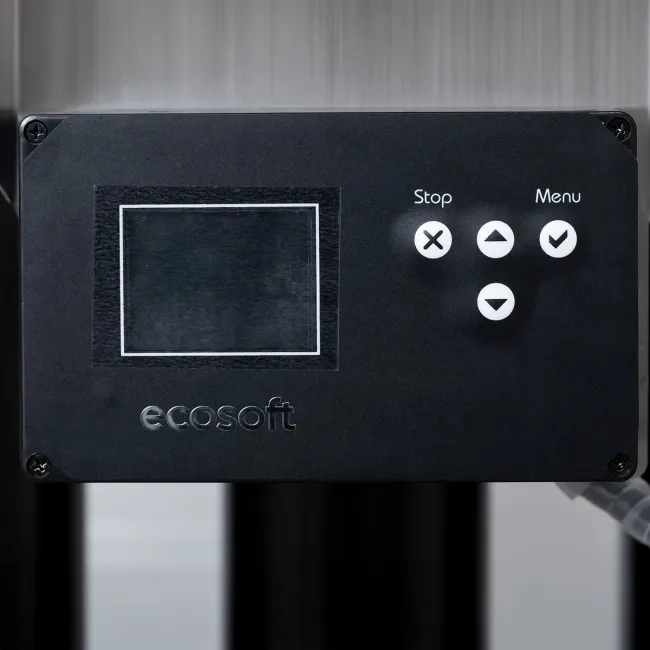
- Water quality is controlled by OC6000 with interent connectivity
- Chemical-free operation due to flow design
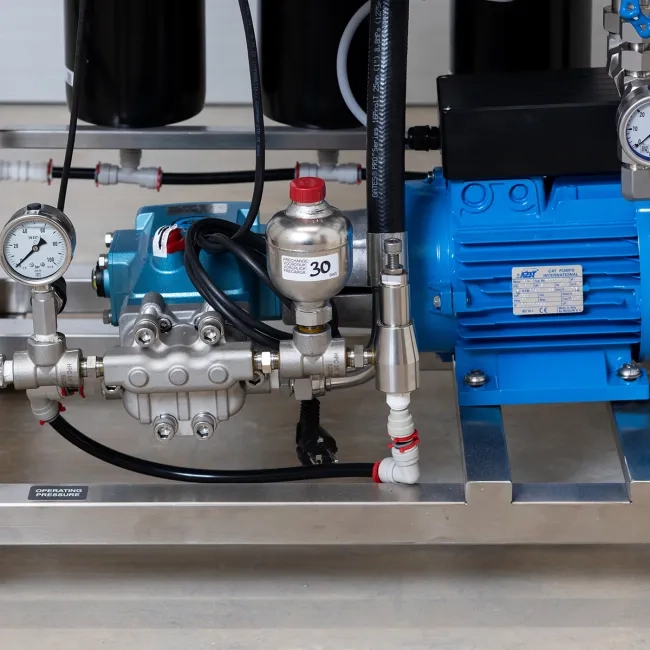
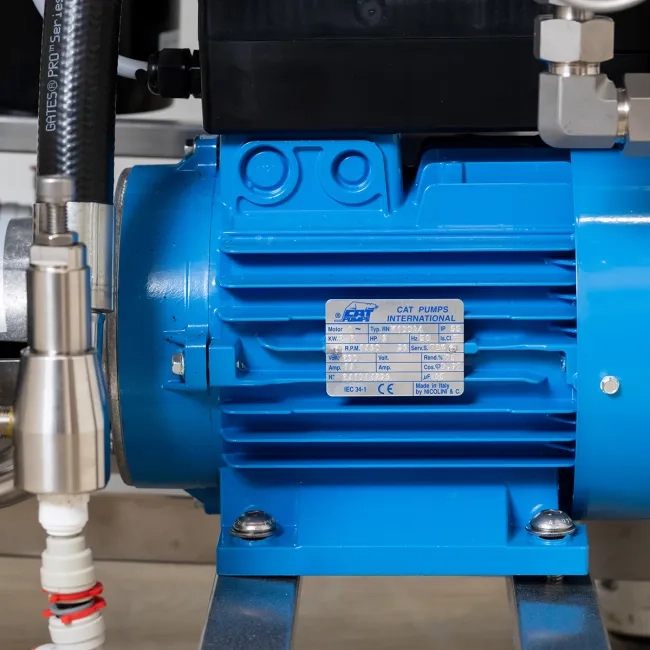
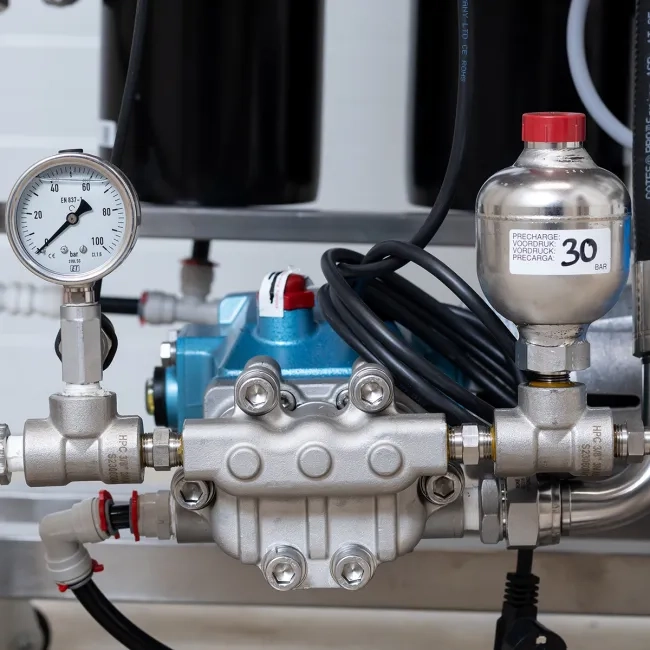
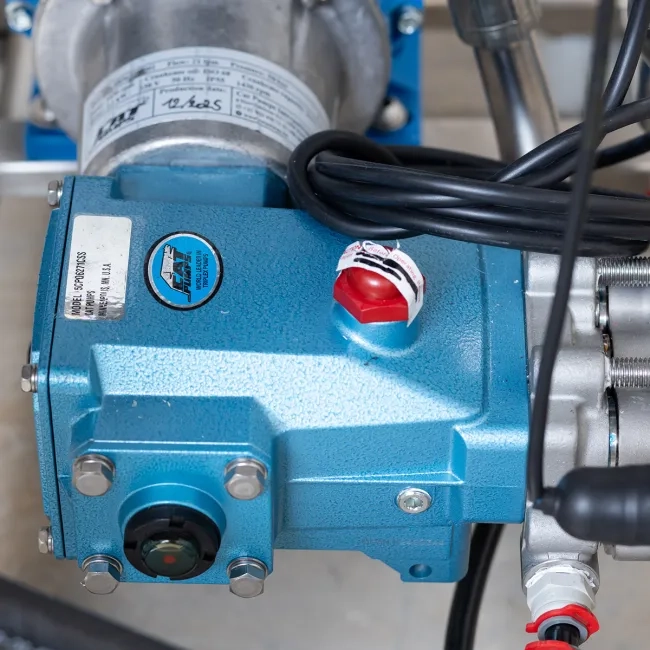
- Single-phase CAT high pressure pump
Product information
The Ecosoft sea water MO10000BI6 reverse osmosis system with a 4-inch pore diameter will purify water for households in coastal areas and islands. Seawater is transformed into safe, drinking-quality water by our advanced chemical-free reverse osmosis system equipped with FilmTec membranes.
Smart engineering, single-phase power, and theEcosoft OC6000 with Econnect provide simple operation and reliable remote monitoring.
Technical information
*The data are indicated under the operating conditions of the system at feed water temperature of 25 °C, a salinity of 35 000 ppm, DUPONT FilmTec™ SW30-4040 membrane element, the unit efficiency is 20%. The performance of your system may be different from these values depending on these factors, the chemical composition of the water and other factors.
*without dosing antiscalant
**with dosing antiscalant
*** If the chloride content exceeds 500 mg/L, it may lead to a reduced service life of the pump due to corrosion
FAQ
-
What is sea water desalination?
It looks like we have plenty of water on Earth, but mainly this water is salty, and we can’t drink it. Salty water is found in the oceans, seas, and near coastlines. Salinity varies from 6,000 ppm in the Baltic Sea to 41,000 ppm in the Red Sea. Desalination is the process of taking salt out of seawater, so it becomes fresh water that’s safe to drink. Reverse osmosis (RO) is a desalination method that uses pressure to push water through a semipermeable membrane. The membrane lets water through but blocks salt and other impurities, producing high quality fresh water.
-
What quality of water will I get from sea water using MO10000SI6?
If your inlet water has a feed water TDS of 15,000 - 40,000 ppm, then your purified water TDS should be up to 500 ppm.
-
Where can I use the water after the system?
You can use purified water to drinking & cooking, whole‑home supply (showers, laundry), swimming pool, garden & hydroponics
-
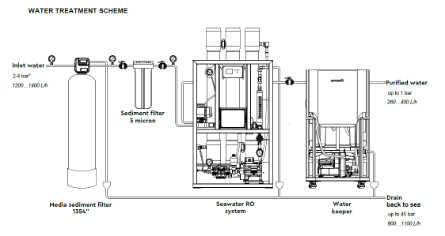
What does a complete sea water purification scheme look like?
In the diagram you can see what a complete water purification system usually consists of.