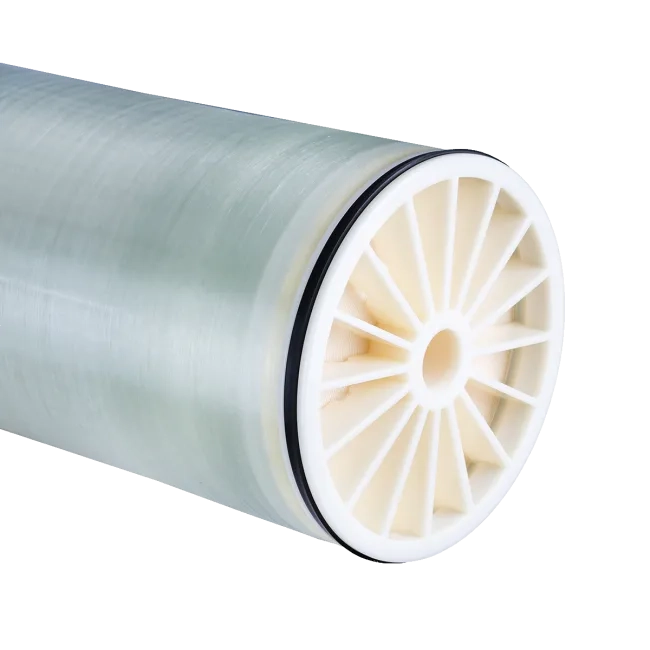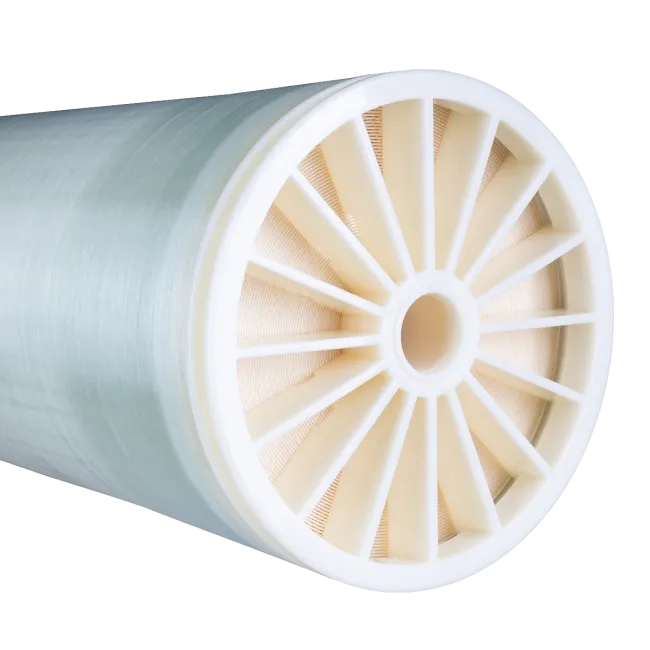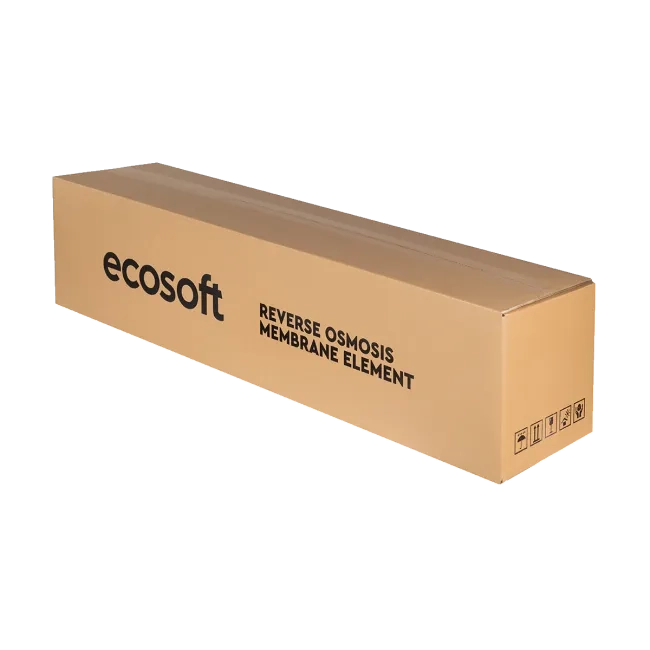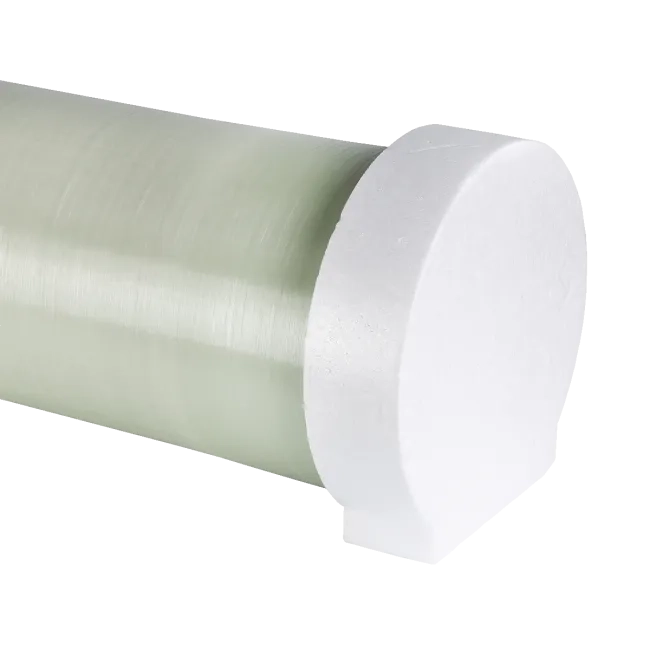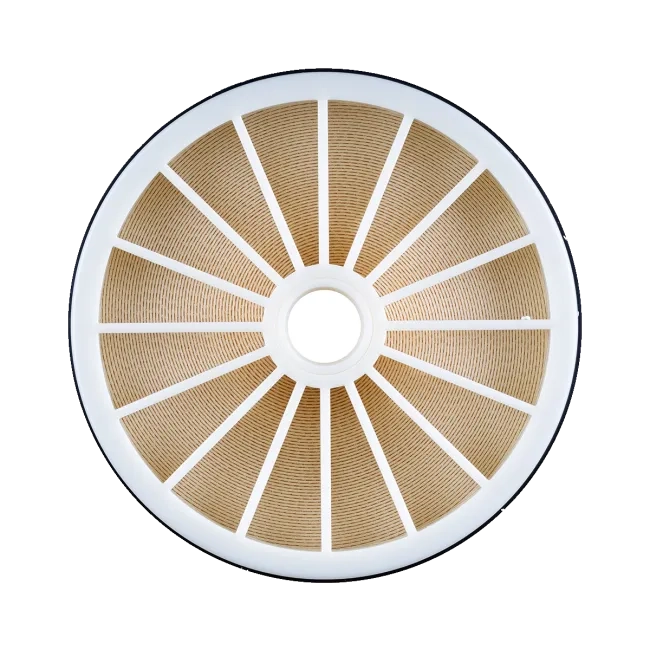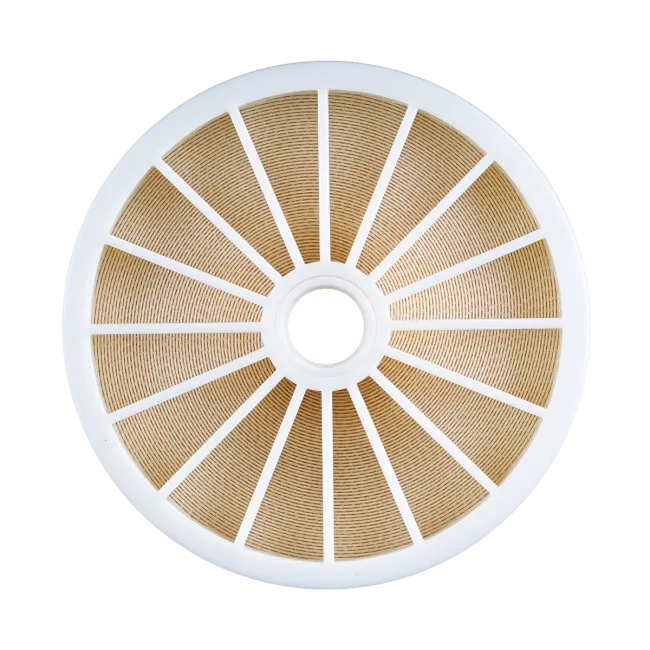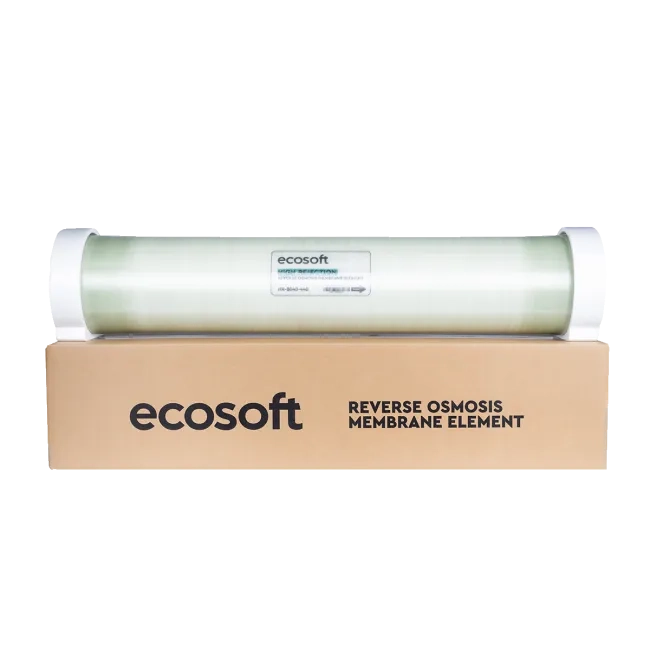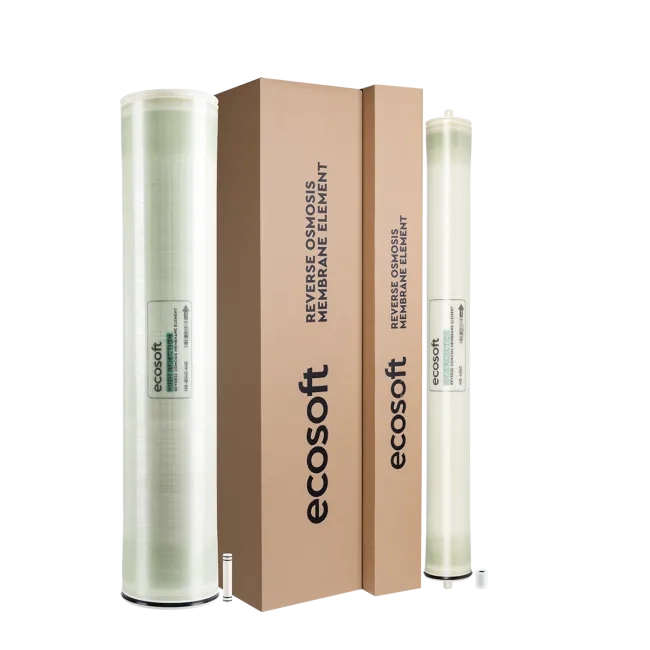


High rejection reverse osmosis membrane element Ecosoft HR-8040-440

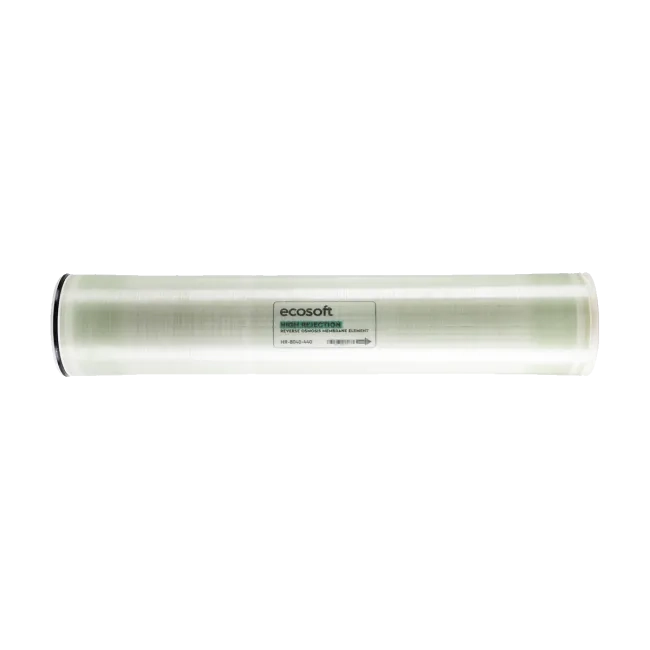
High rejection reverse osmosis membrane element Ecosoft HR-8040-440
- Permeate flow rate up to 51.1 m³/day
- High salt rejection at low operating pressure
- Up to 99.3% salt rejection
- Recommended for feed water TDS up to 2500 mg/L
- Designed for industrial reverse osmosis systems
- Suitable for chemical and food industry, laboratories, car washes and thermal power plants


Product information
High rejection reverse osmosis membrane element Ecosoft HR-8040-440 is designed for 8″ industrial reverse osmosis systems that require high salt rejection with efficient operation at low pressure. It delivers permeate flow up to 51.1 m³/day and provides up to 99.3% salt rejection. The membrane is recommended for feed water with TDS up to 2500 mg/L* and can also be applied in systems with elevated nitrate and silicate levels in the feed water.
Ecosoft HR membranes are manufactured using technology that supports long-term and reliable system operation. This membrane is suited for industrial applications including the chemical and food industry, laboratories, distilled water preparation, car washes, data centers, agriculture, and thermal power plants.
* For Ecosoft RO systems operating at 75% recovery and feed water temperature of 12°C, feed water TDS of 2500 mg/L typically corresponds to permeate TDS of approximately 100 mg/L.


Technical information
* Permeate flow for a single element may vary by ±15% from the stated value.
** Permeate flow and salt rejection are based on standard test conditions: 1500 mg/L NaCl, 25°C, pH 8 and 15% permeate yield.
Before start-up, make sure the membrane is properly prepared for operation. Check membrane pretreatment, membrane element installation, instrument calibration, and overall system condition.
Avoid major pressure surges and flow fluctuations inside the spiral-wound elements during start-up, shutdown, cleaning, and other service procedures, as they may damage the membrane.
During launch, it is recommended to gradually switch the system from standstill to operational mode by following these steps:
- Gradually increase feed water pressure during 30–60 seconds,
- Bring the system to operating flow gradually during 15–20 seconds,
- Permeate produced during the first 60 minutes of operation should be discharged.
Keep the membrane wet after initial wetting.
To prevent biofouling during extended shutdowns, store the membrane elements in a preservative solution. The pressure drop across the full length of the housing must not exceed 3.4 bar.
FAQ
-
How does HR-8040 perform in water with high silica levels?
The HR-8040 membrane utilizes a denser polymer structure to provide the highest level of silica rejection.
Due to its 99.3% selectivity, the concentration of dissolved silica at the membrane boundary layer increases significantly faster than in the HF-8040. This leads to a faster saturation point, making the risk of glass-like scale formation on the tail-end elements critical. Since this type of scale forms nearly indestructible siloxane bonds, removal with standard acidic cleaning is impossible and requires specialized high-pH alkaline reagents.
Operating these membranes demands rigorous pH control and the use of antiscalants with enhanced silica-inhibiting properties. Even a minor deviation from the calculated permeate recovery can lead to irreversible pore clogging, immediately reflected by a spike in both salt passage and operating pressure. Therefore, choosing the HR-8040 for silica-rich water requires precise chemical dosing and a strict preventive CIP maintenance schedule.
-
When should the membrane be cleaned?
Cleaning-In-Place (CIP) should be performed when normalized permeate flow drops by 10%, salt passage increases by 10%, or differential pressure increases by 15%.
-
What is the typical service life of this membrane?
With proper pretreatment and regular cleaning, the typical membrane lifespan is 3 to 5 years, although some industrial systems may operate for more than 7 years. Under difficult water conditions, service life may be reduced to 1.5–2 years.
-
How should telescoping be prevented in 8040 elements?
Telescoping is prevented by using a thrust ring at the end of the pressure vessel. Make sure the thrust ring is installed correctly to prevent physical damage caused by high pressure drop.
-
Can Ecosoft HR-8040 membranes handle sudden increases in turbidity?
No. HR-8040 membranes are sensitive to suspended solids. If turbidity spikes occur, the feed water should be diverted or additionally filtered to prevent plugging of the feed spacers.
-
Does the salt rejection of the HR-8040 change over time?
Yes. Salt rejection is typically highest during the first months of operation. Over time, and after repeated chemical cleanings, the polymer structure may gradually degrade, which can lead to increased salt passage.
-
What are the recommended storage temperatures for new membranes?
New membrane elements should be stored in a cool, dry place away from direct sunlight, ideally at temperatures between 5°C and 35°C. Freezing must be strictly avoided.
-
Why may permeate flow exceed the design value?
This may be caused by higher-than-expected feed water temperature or, more seriously, by a mechanical leak such as O-ring failure or damage to a membrane leaf.
-
Can the HR-8040 membrane remove viruses and bacteria?
Theoretically, yes, because the membrane pores are much smaller than microorganisms. However, reverse osmosis membranes are not certified as biological barriers, as leaks at O-rings or minor element defects may affect biological removal.
-
How does high pH affect membrane service life?
While the membrane can withstand high pH during short cleaning cycles, continuous operation at pH above 10 can gradually damage the polyamide layer and reduce salt rejection over time.
-
What happens if the pressure drop across one element exceeds 1.0 bar?
A pressure drop above 1.0 bar usually indicates fouling or blockage. It can cause mechanical stress inside the element and may lead to telescoping, feed spacer damage, or damage to the membrane selective layer.
-
Do all membrane elements in a multi-element vessel foul in the same way and what is the difference between lead and tail positions?
No. In multi-element pressure vessels in industrial systems, the type of fouling depends directly on the element position: the lead element typically suffers from physical and organic fouling, while the tail element is more exposed to mineral scaling.
The first module in the membrane vessel comes into contact with raw water at the highest flow velocity, acting as a barrier for suspended solids, bacteria, and organic matter, which results in increased differential pressure. The last element operates with highly concentrated brine, where calcium, magnesium, and silica levels often exceed solubility limits and precipitate onto the membrane surface. This phenomenon, known as scale crystallization, appears as a sharp drop in salt rejection and an increase in permeate TDS, especially at the tail end of the system. When high-rejection HR-8040 membranes are used, the risk of scaling on the tail element is higher because they reject salts more effectively, creating a steeper concentration gradient at the membrane surface. Therefore, protecting lead elements requires high-quality mechanical pretreatment, while protecting tail elements depends on proper chemical conditioning of the concentrate.
-
How can I tell whether performance loss in HR-8040 is caused by fouling or scaling?
Fouling (organic or biological) usually causes a gradual decline in permeate flow together with a moderate increase in pressure drop. Scaling, especially inorganic scaling such as calcium carbonate or silica, often causes a sharper flux drop and may be localized in the lead elements. Cleaning response is also different: fouling usually responds better to alkaline cleaning, while scaling typically requires acid cleaning. In HR-8040 systems, a combination of both may occur, so identifying the dominant cause is critical.
-
Are Ecosoft HR-8040 membranes compatible with standard antiscalants?
Yes, Ecosoft HR-8040 membranes are compatible with most phosphonate-based and polymer-based antiscalants. The required dose depends on the specific antiscalant and feed water composition. Antiscalants are typically dosed continuously in the range of 2 to 5 ml/m³. The exact dose can be calculated using Avista AdvisorCi.
-
What role does concentrate flow play in protecting the membrane?
Concentrate flow maintains cross-flow velocity, which helps wash contaminants away from the membrane surface. If concentrate flow is too low, particles and dissolved salts accumulate near the surface, increasing the risk of fouling and scaling. For HR-8040, stable and sufficient concentrate flow is important for long-term operation.
-
What is the main difference between Ecosoft HR and HF series membranes?
The main difference is the balance between salt rejection and permeate flow.
The High Rejection (HR) series is designed for higher salt rejection up to 99.3% at a slightly higher operating pressure of 10.3 bar, making it more suitable for applications with elevated nitrate and silicate levels. The High Flow (HF) series is designed for higher permeate flow up to 53 m³/day and energy-efficient operation at extra-low pressure of 6.9 bar, with a stabilized salt rejection of 98.0%.
The choice depends on whether the priority is higher rejection or higher flow with lower energy consumption. Therefore, for silica-rich or high-purity needs, the HR series is essential, whereas the HF series is the standard for general industrial water production.
Related products