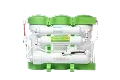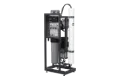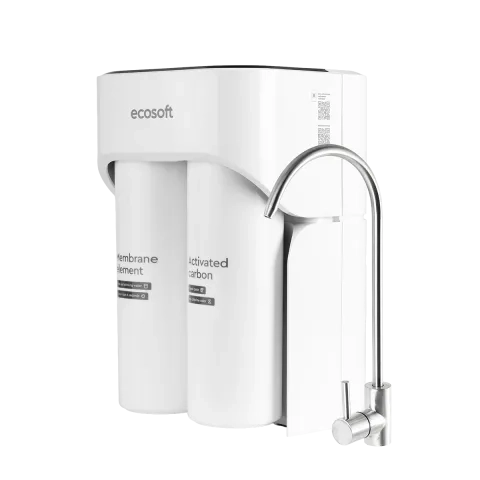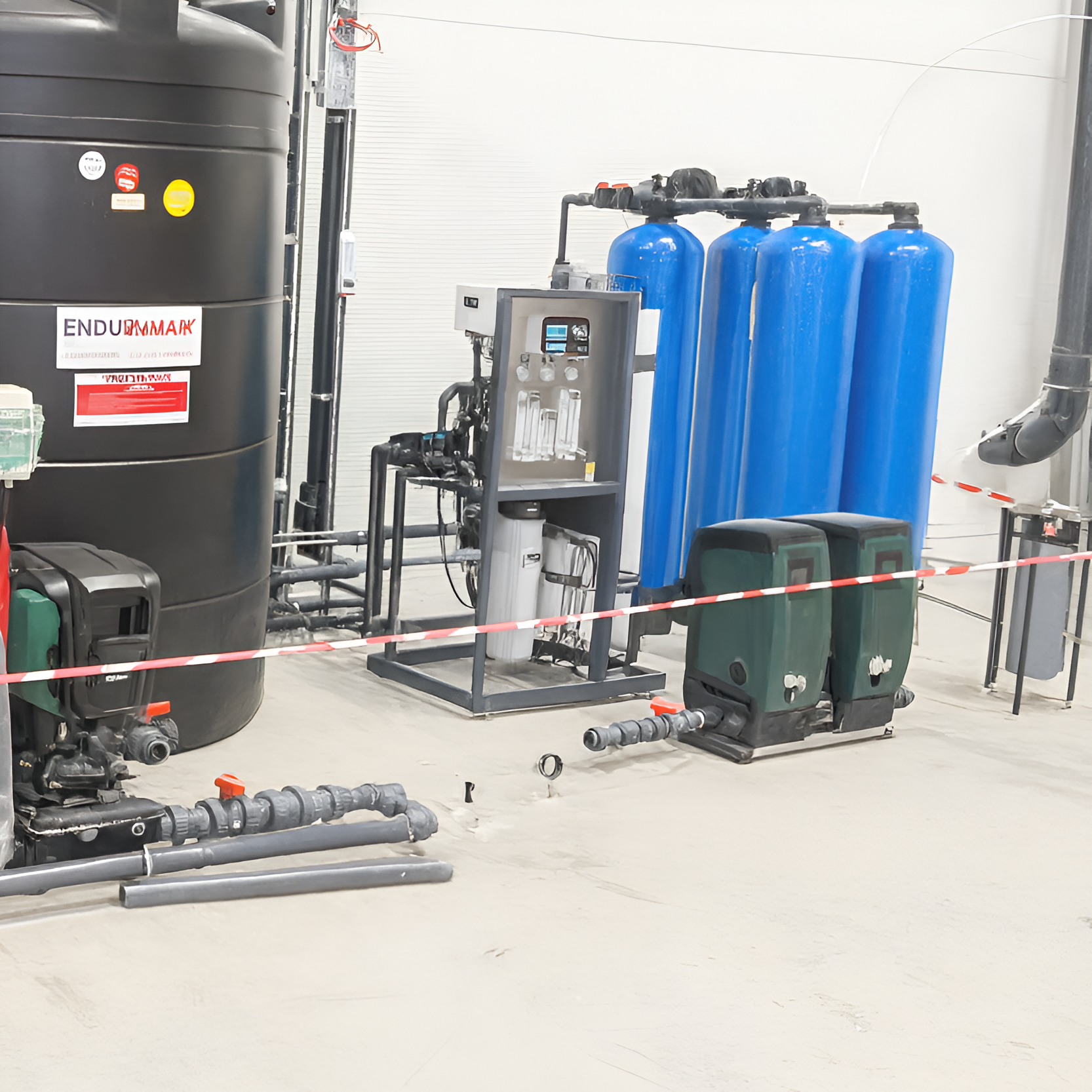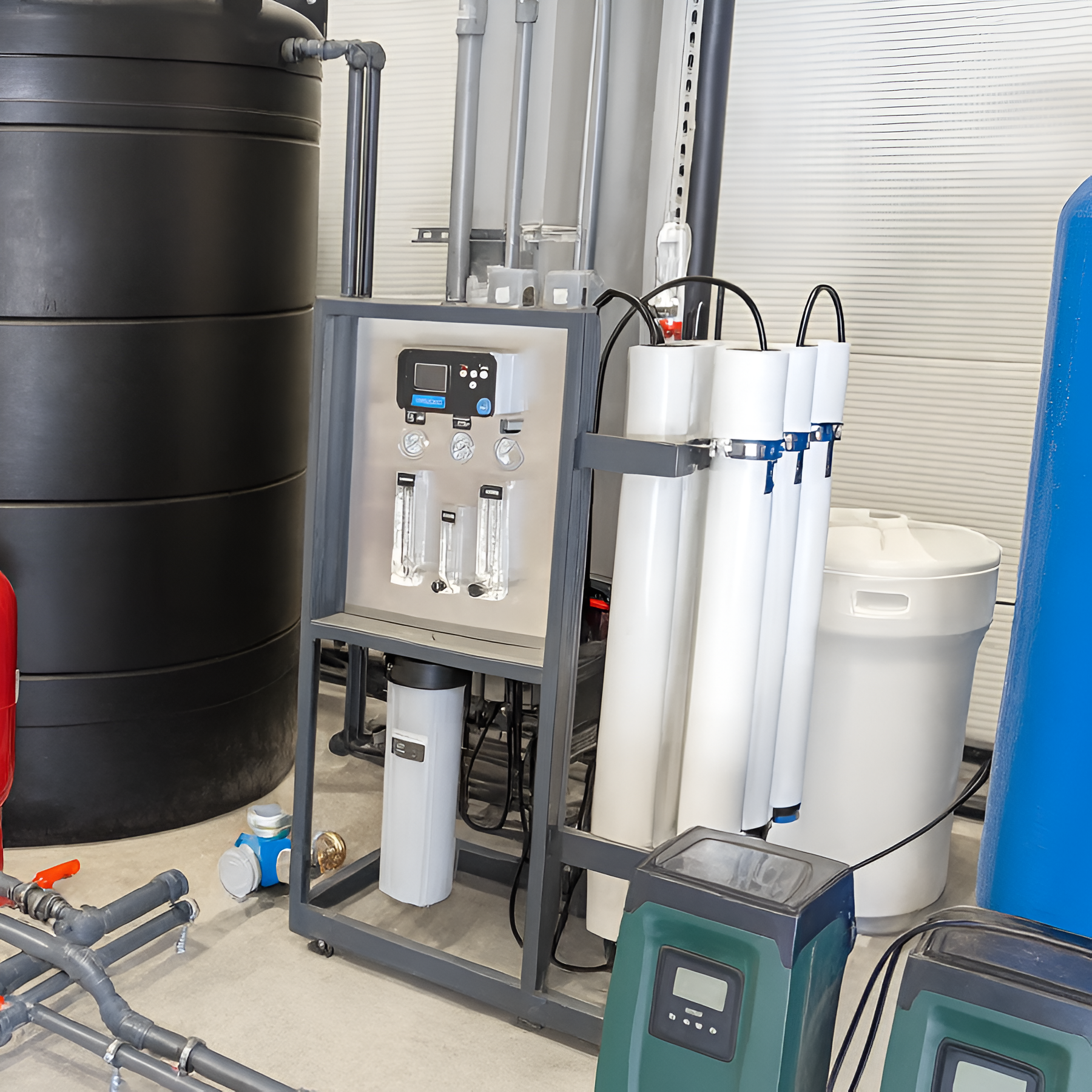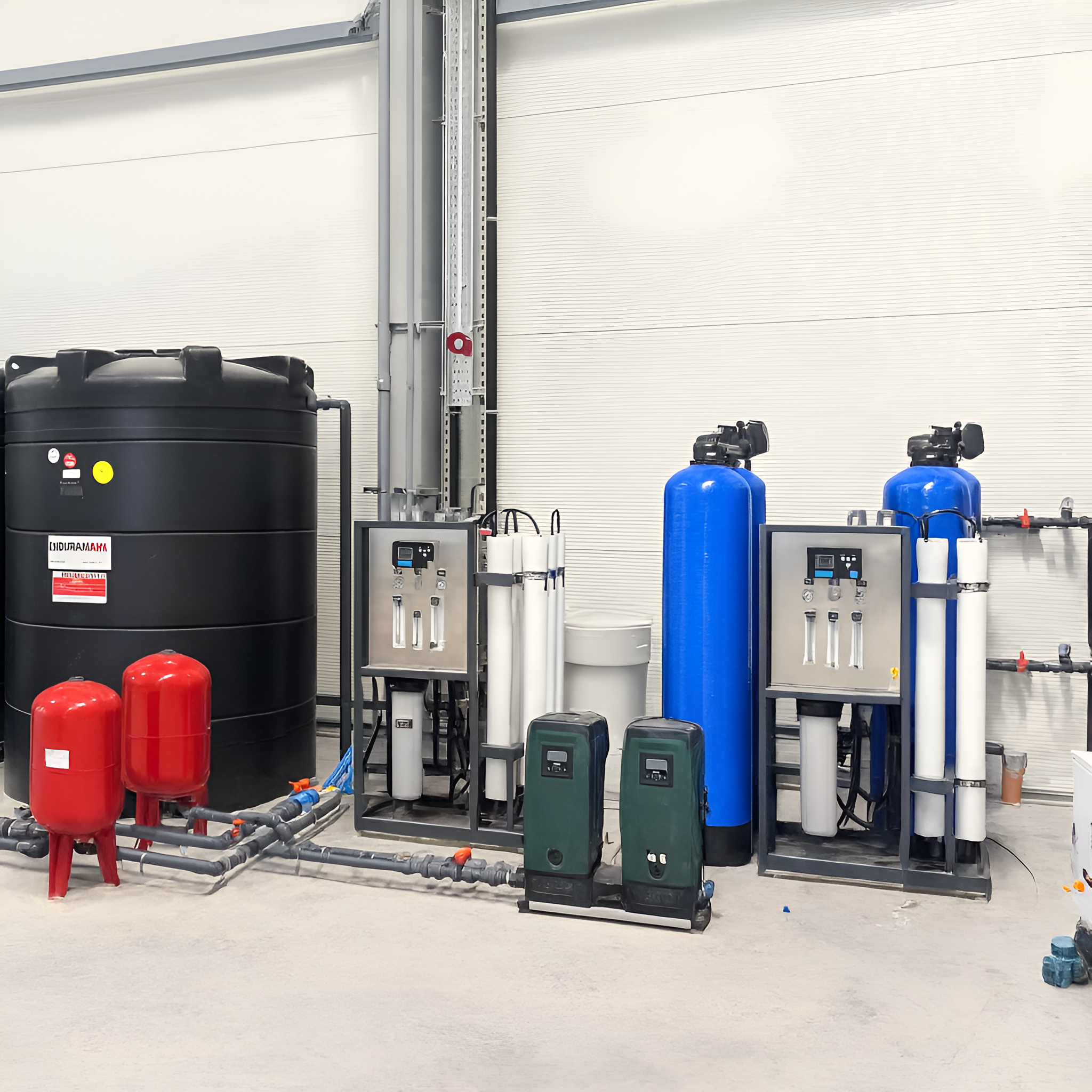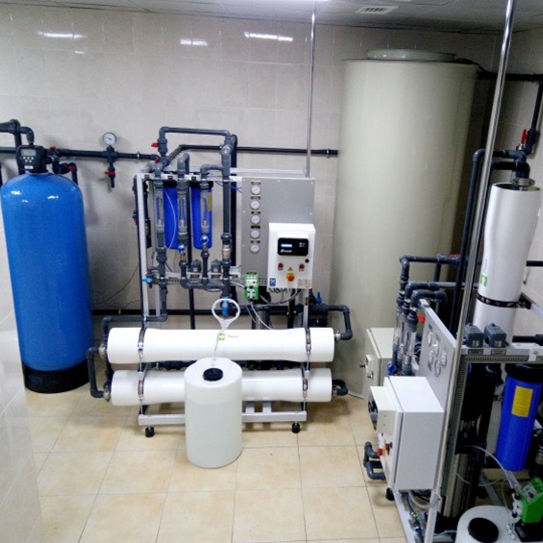
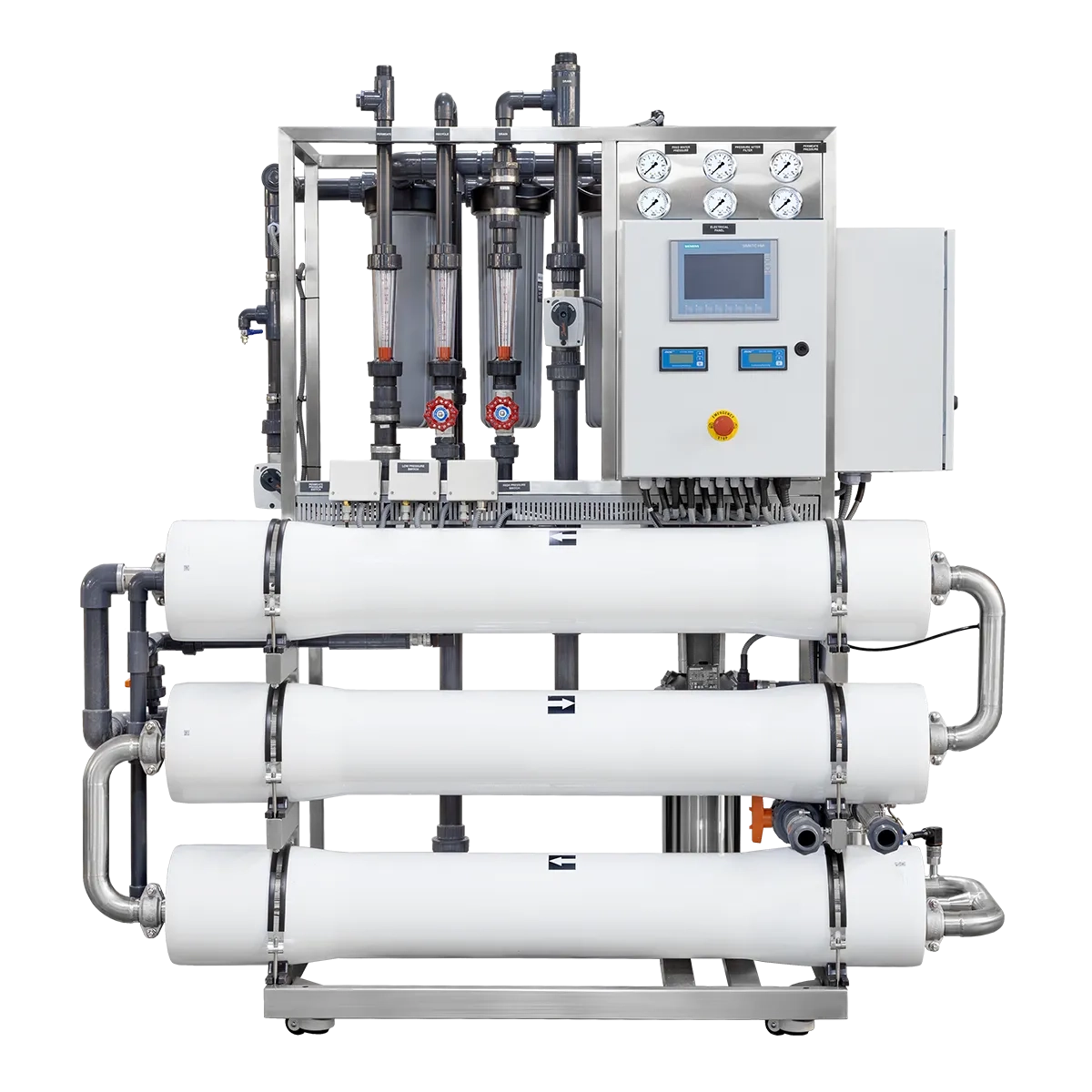
By choosing a domestic or commercial reverse osmosis system, you ensure the highest water quality possible. Even in Europe, where tap water meets strict safety standards, people prefer to use RO filters to remove hidden pipe contaminants and chemical traces and improve water taste. Today, the technology features a wide variety of solutions. The article will explore the subject and offer a brief buying guide.
Why Choose a Reverse Osmosis System?
RO systems produce pure spring water that can be used for cooking, cleaning, heating, or manufacturing. A membrane removes salts, dissolved mineral ions, bacteria, most viruses, pesticides, herbicides, pharmaceuticals, nitrates, natural organic acids, synthetic "forever chemicals” (PFAS), heavy metals like lead and arsenic, and some other contaminants.
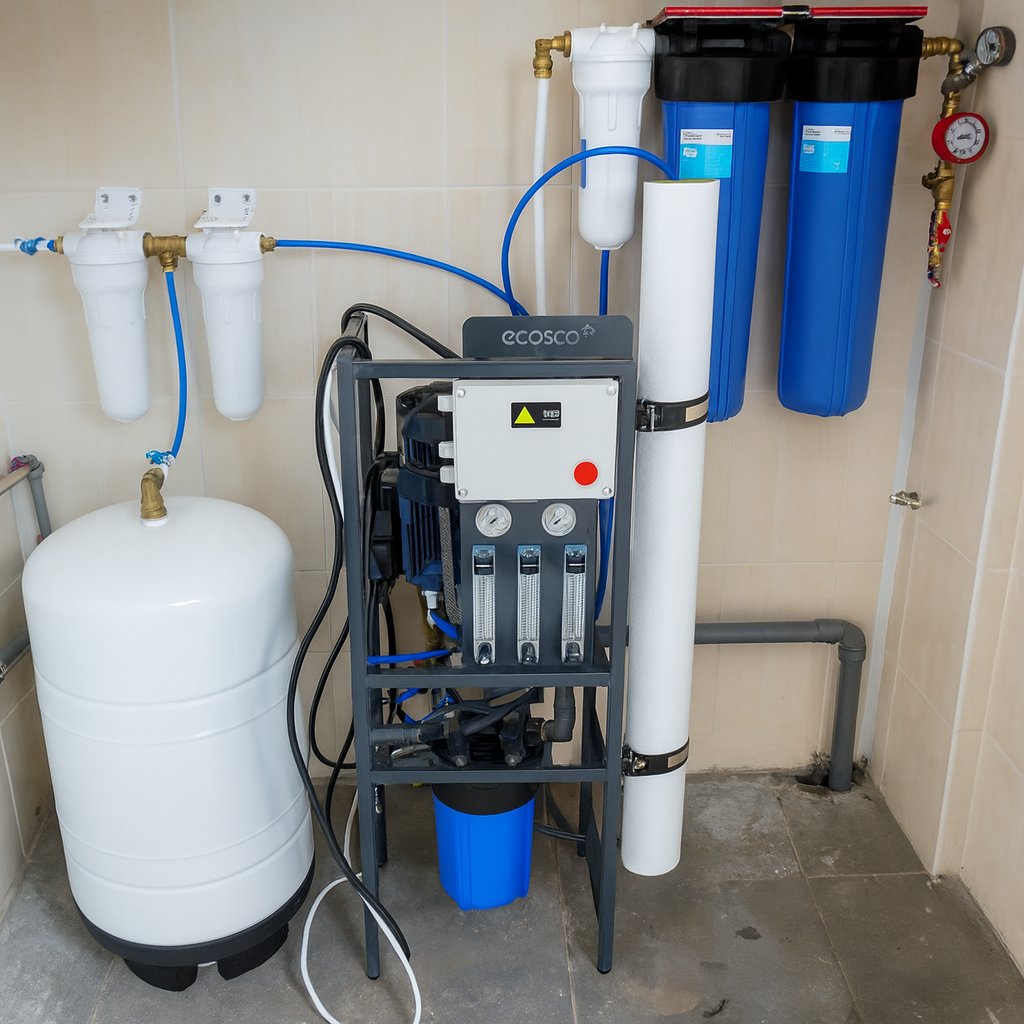
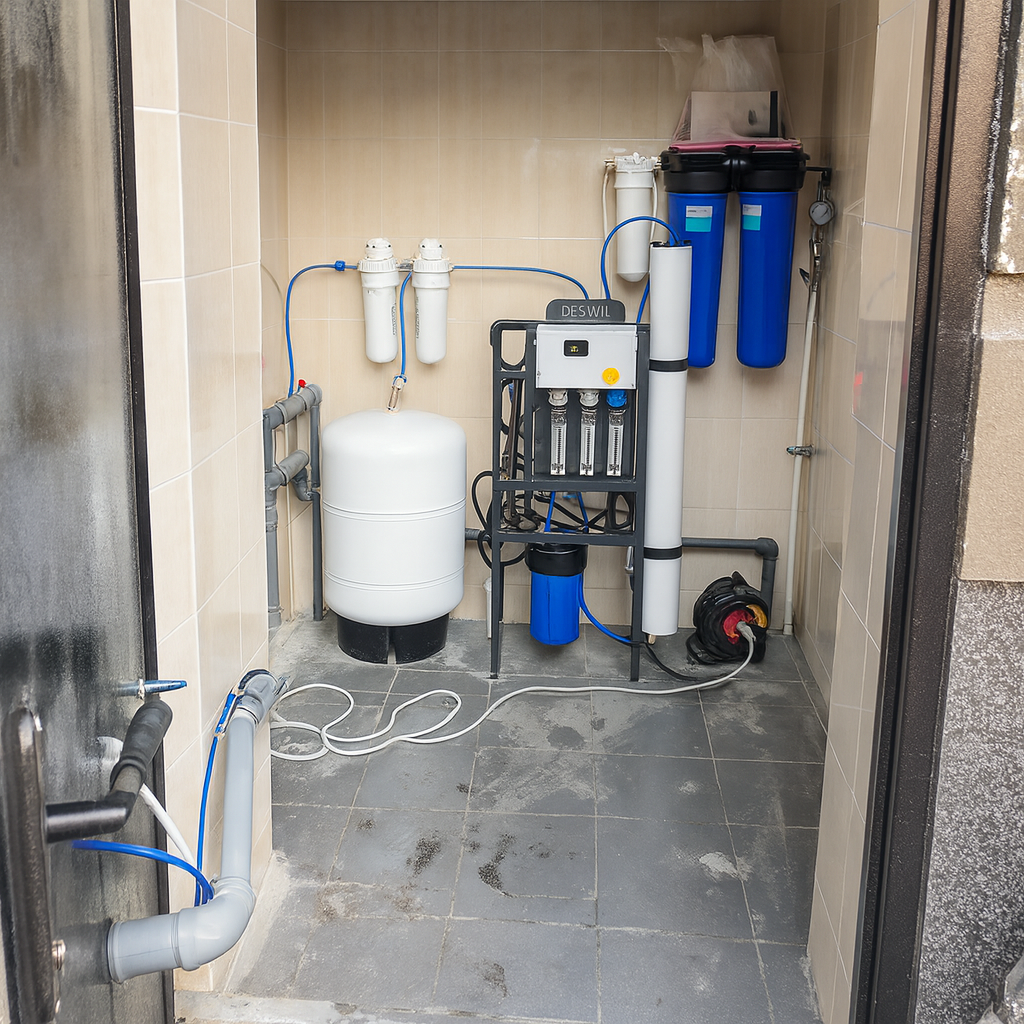
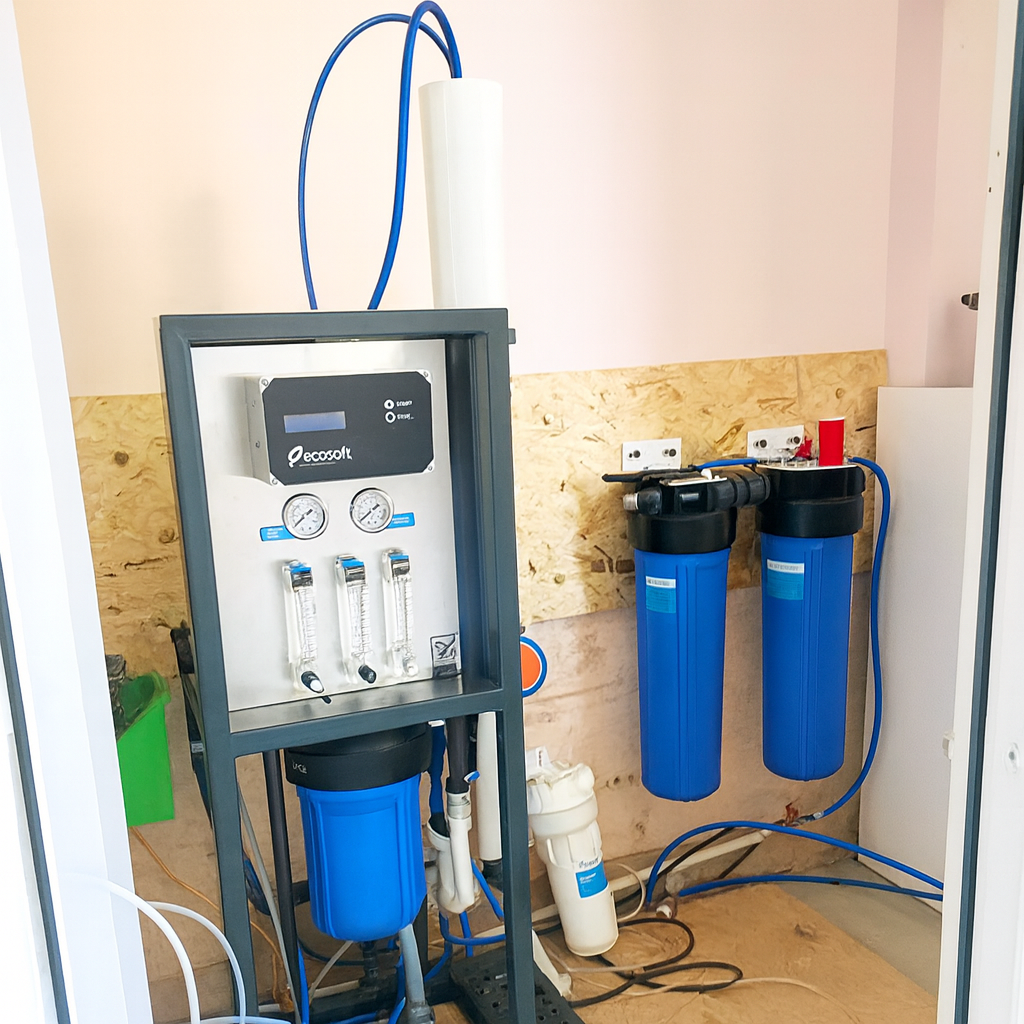
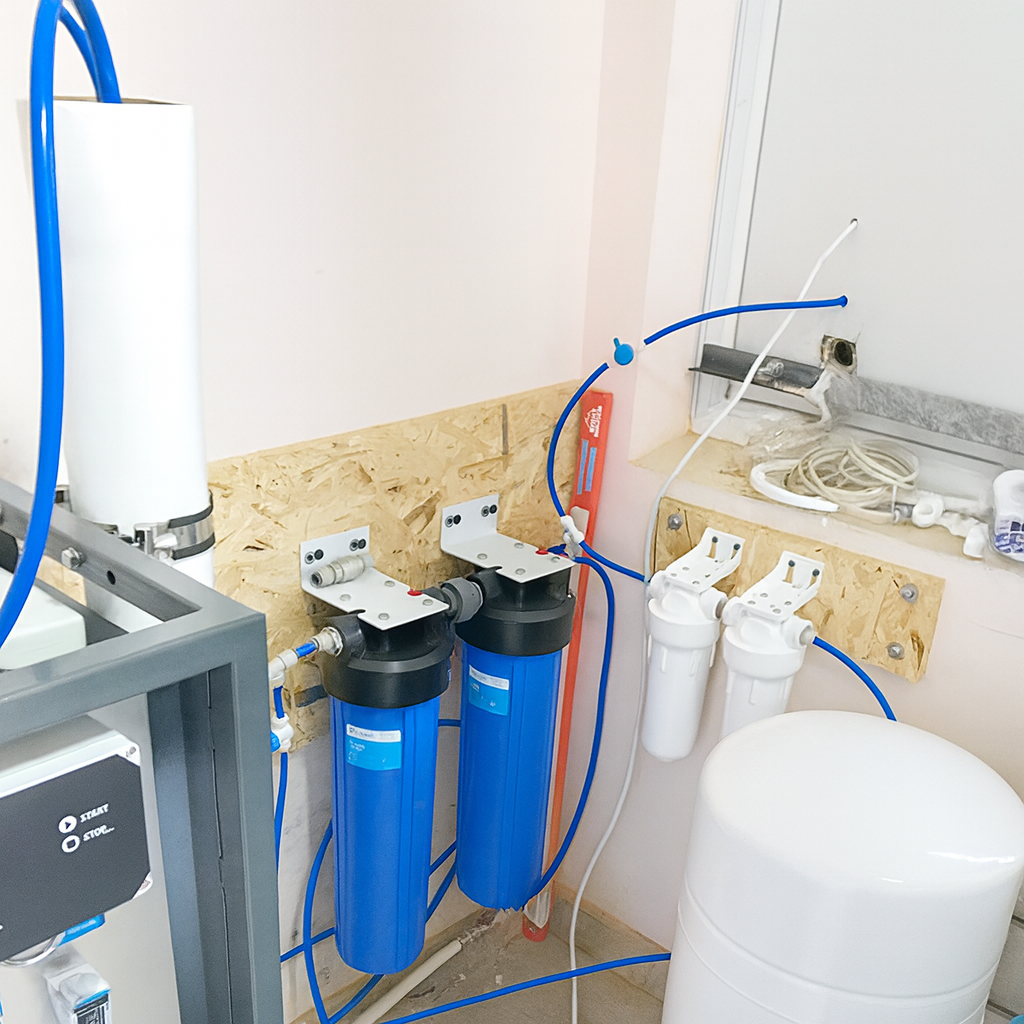
The system typically enables several stages of water treatment that include pre-filters, an RO membrane, and post-filters. Ecosoft offers equipment that does not have any radiological, chemical, or electrochemical impact on the environment. It is safe for the human body.
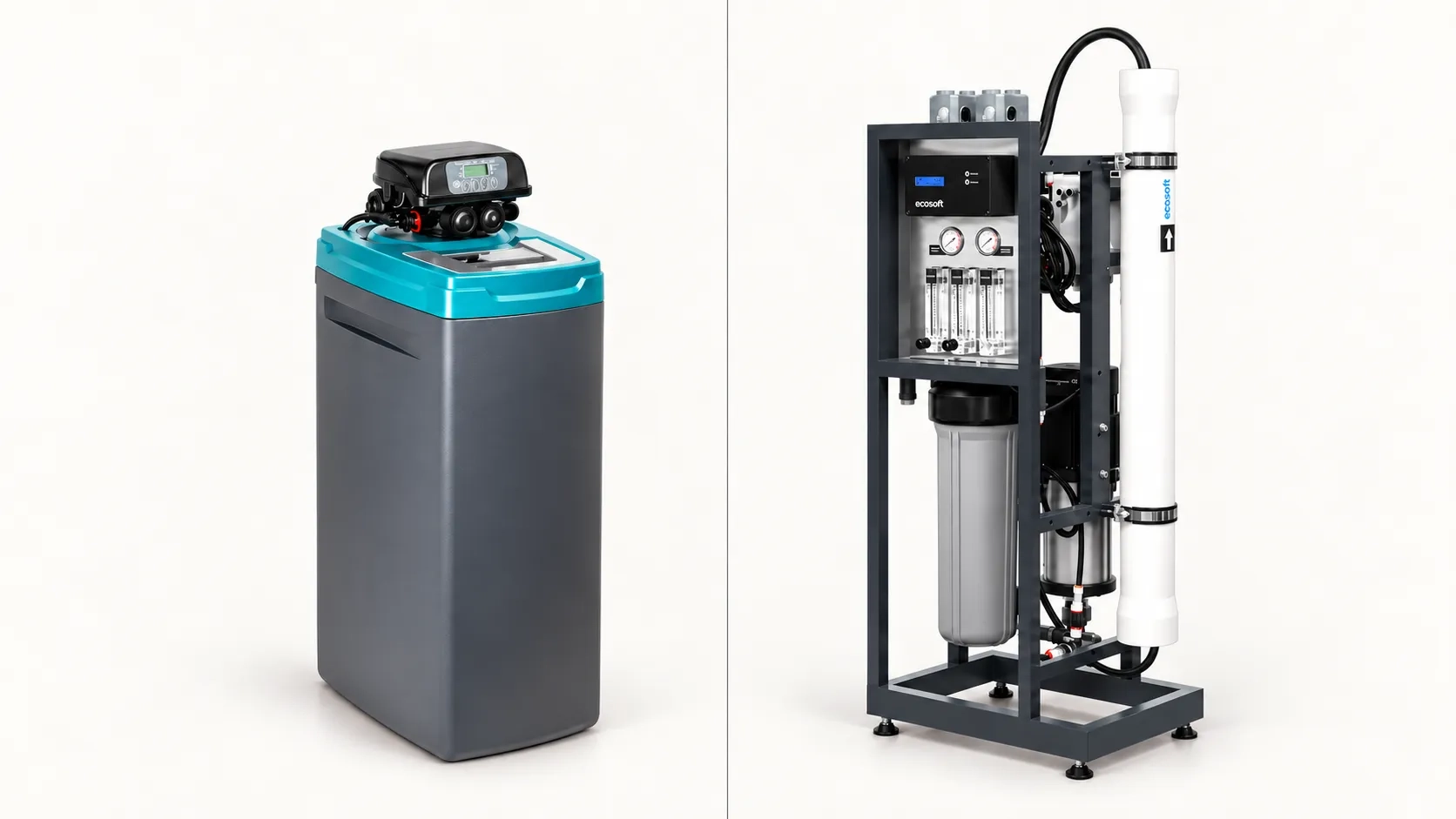
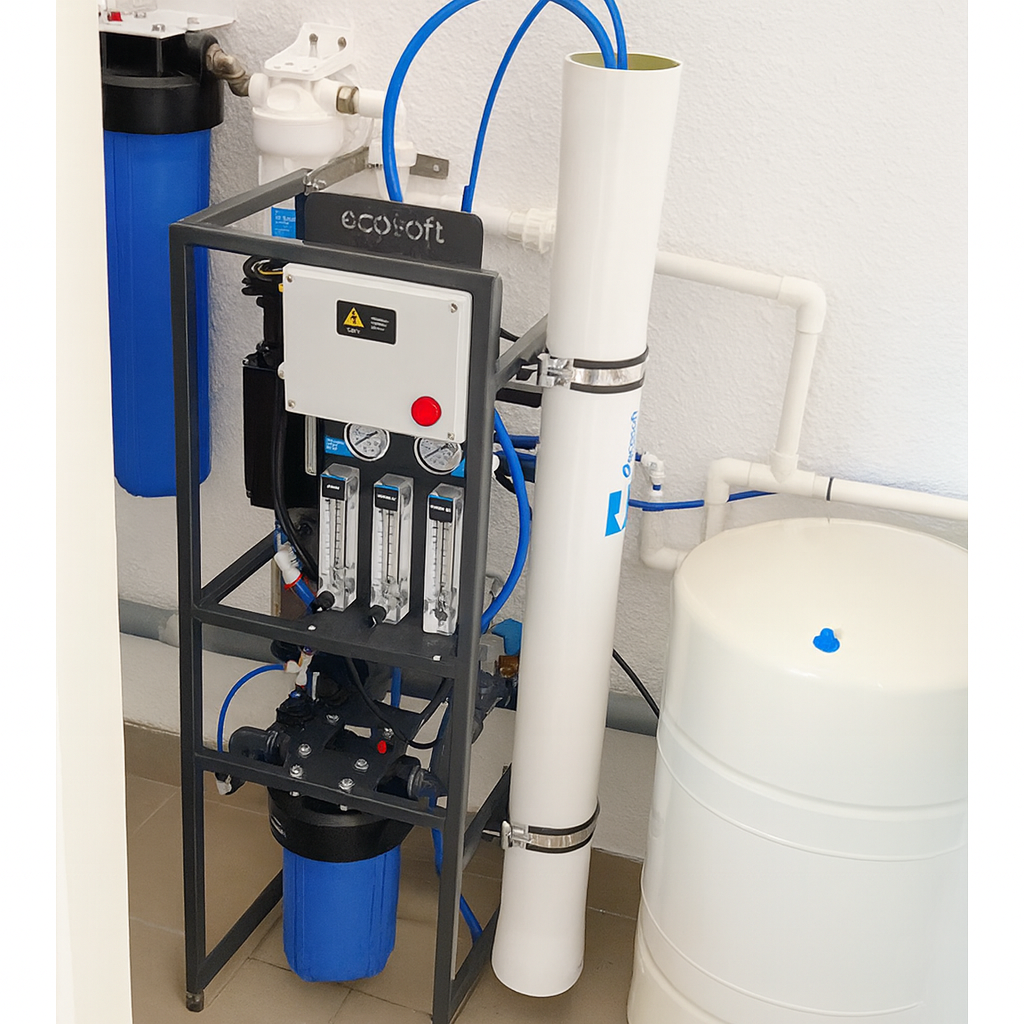
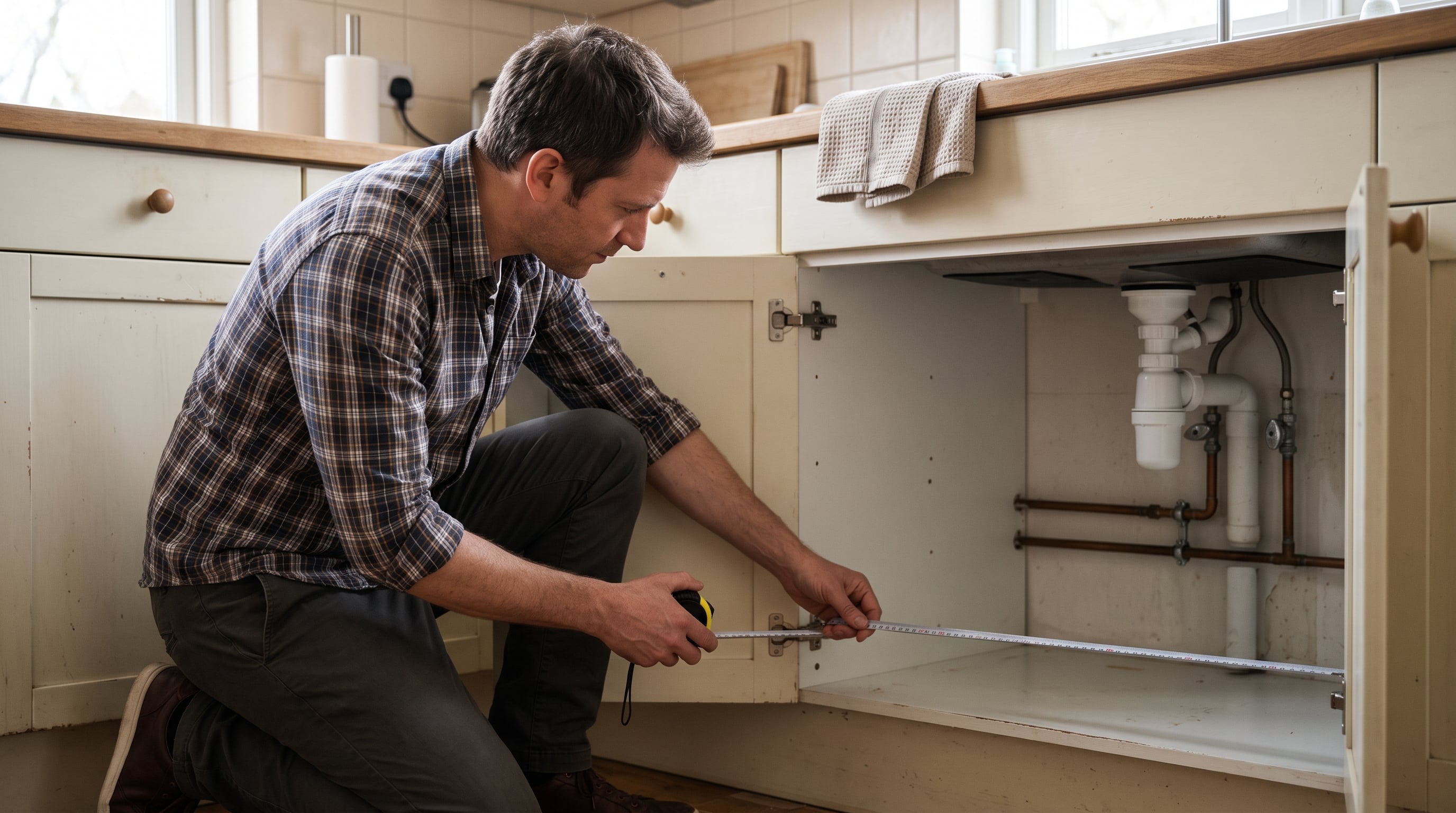
Ecosoft units are ready-to-use, which significantly facilitates installation. Systems can be connected and launched without professional assistance. No specific deployment is needed. We offer point-of-use and point-of-entry RO systems to install beneath a sink or into the mains before water is delivered to consumers.
So, you should decide which one is economically feasible. If the water quality is high enough and you just need to remove hard minerals, the cost-effective solution is probably a water softener installed at the point of entry. Then, you can use a reverse osmosis filter at the point of use and reduce operating expenses.
Typically, we offer a warranty period of 12 months from the date of purchase, provided that the system is used for treatment of water that meets the requirements. Otherwise, the service life of a membrane element and pre-filter cartridges may be reduced. We recommend performing a laboratory test of water before installing a reverse osmosis filter.
Key Features to Compare Before Buying
The selection of a system should be based on the requirements for water treatment. Also, the water to be treated must meet parameters specified by the manufacturer, such as pH, total dissolved solids, hardness, chlorine, total iron, etc.
When water enters the RO system, it passes through a pre-filtration stage, which is mandatory to protect a sensitive semipermeable membrane from suspended particles and other organic substances. To improve flavour and polish the purification, carbon filters and UV sterilisation should be used. Actually, configurations differ. Before buying, you need to draw a comparison of the following basic parameters:
- number of filtration stages;
- flow capacity measured in litres per minute (or per hour) or gallons per day (GPD);
- the percentage of recovery rate, which is the higher (50%-80%), the better;
- inlet pressure, which is needed for the system to operate properly;
- smart functions, like a leak sensor, a filter/cartridge replacement reminder, and automatic flushing.
We also recommend choosing equipment with AquaGreen technology that reduces wastewater. Another useful option is a mineraliser added to an RO filter to enrich water with calcium at a level required to support bone health. For instance, you can consider an Ecosoft PURE AquaCalcium Mint reverse osmosis filter.
Common Mistakes When Selecting a System
When selecting new RO filters, the following common mistakes should be avoided:
- Skipping untreated water parameters. This will result in improper water purification and decreased equipment durability.
- Ignoring water pressure. If you buy a system that requires higher pressure than is available, you will have to use an electric booster pump.
- Choosing units without being sure that you can easily buy consumables at any moment.
- Disregarding wastewater output and electricity consumption, which may dramatically cut the operating expenses.
- Forgetting about certification of the equipment that guarantees the quality of the construction and materials used in it.
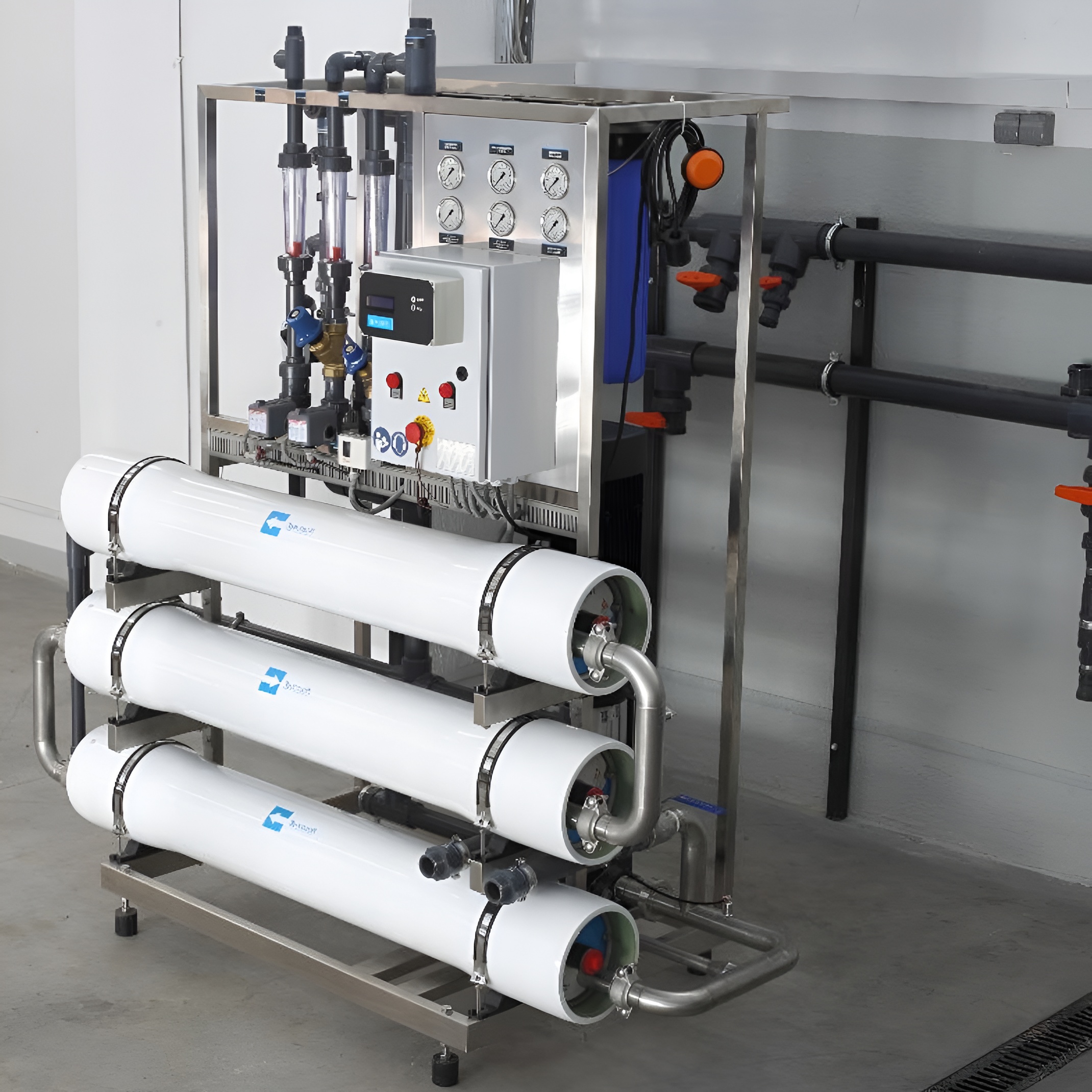
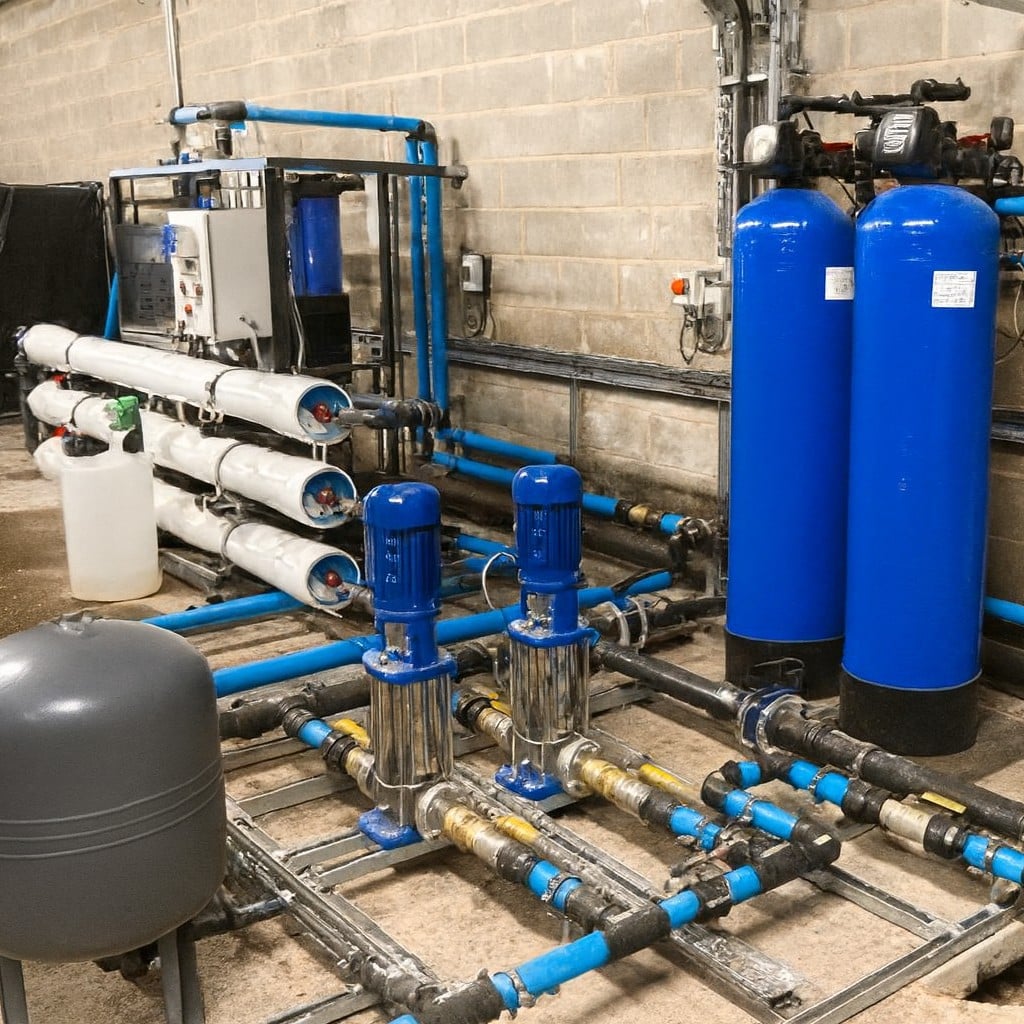
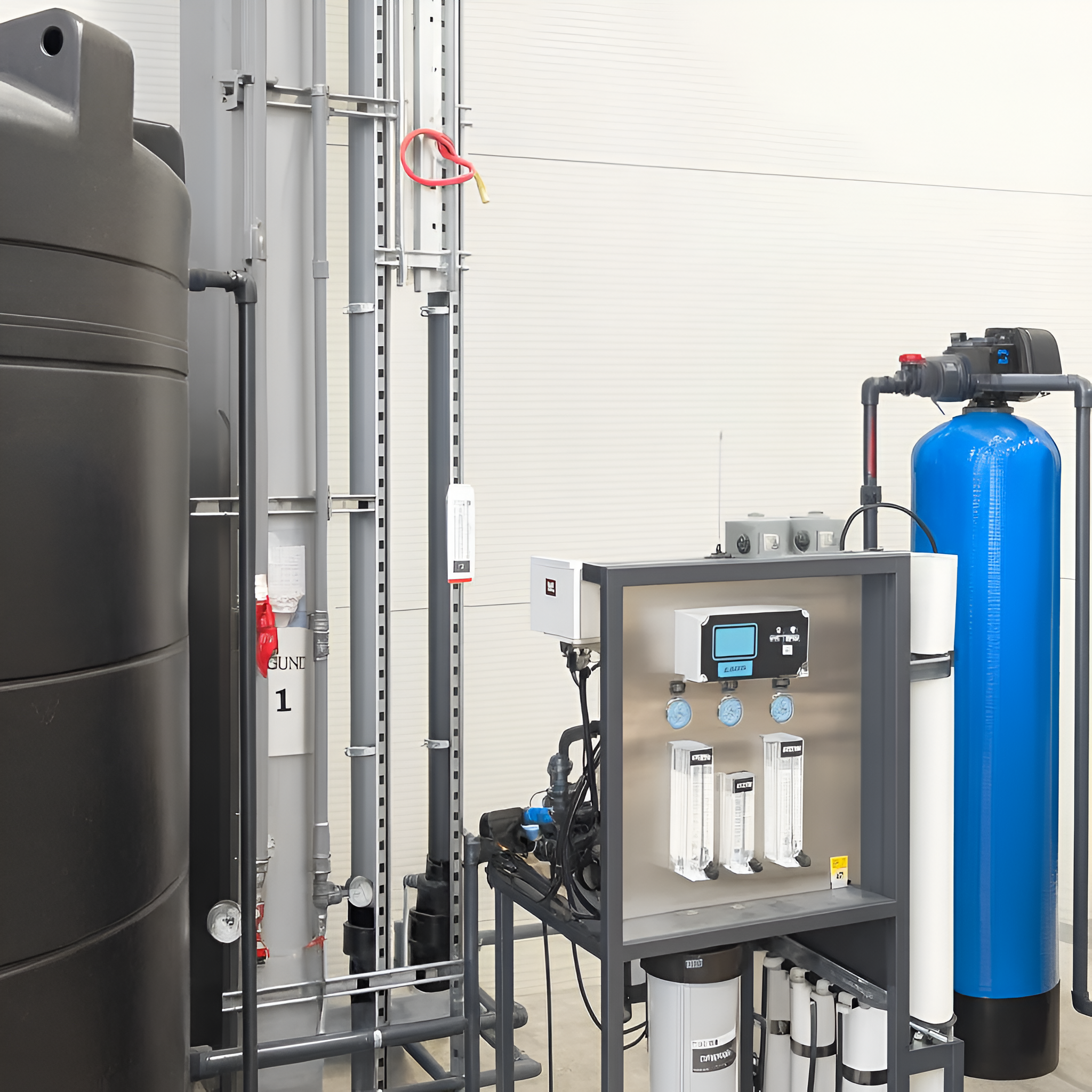
We highly recommend starting with a consultation with our managers. They will guide you through our selection and help you define clear requirements; consider future scalability, prioritising optimal price and operating expenses; and take into account integration conditions. If the system is meant for commercial purposes, it should be equipped with a robust pump, be easily managed through a smart controller, and operate continuously 24/7.
It makes sense to ensure that a system contains components from leading global manufacturers, which prove the reliability of the equipment. The design is important, as it can enable simple connections of various additional options such as raw water blending for different water qualities. When deciding on a supplier, ensure that he offers technical support and a proper warranty.
Maintenance and Long-Term Performance
Regular maintenance includes replacement of membrane and filter elements, which are consumables with limited life. The frequency depends on the particular RO system characteristics, local water quality, and intensity of treatment. Typically, membranes are replaced every 1–3 years, and water filters every 4–6 months.
If any unexpected issues, like limited performance, improper water taste, change of water colour, or any other, occur, it is better to call for service. We provide our clients with contacts for local trained professionals globally.

Conclusions
Reverse osmosis is a perfect method that improves water quality through a physical system. No chemical products are used in the process. Systems with various capabilities and additional options enable appropriate equipment selection. At the same time, the variety can make the choice more difficult.
If you feel confused, you can benefit from the Wizard available on our site. It helps you find the perfect setup according to your unique conditions based on your home and water quality. Or you are welcome to contact us. Our managers will help you buy the best RO filter with the least money, effort, and time spent on selection.